
Field spraying services — from 400 ha
We treat fields with our own self-propelled sprayers and operators: herbicide, fungicide and insecticide protection, foliar feeding and desiccation. Western and central Ukraine, payment per treated hectare.
Sprayers we work with
Our own fleet, no middlemen. Every machine has its own operator.
Flagship · 3 systems
What the biggest machine in our fleet delivers
The New Holland SP310F is the largest machine in our fleet: a boom up to 41 metres and a tank up to 6,060 litres. Three systems that make the product land evenly:
IntelliSpray — control of every nozzle
Individual pulse control of every nozzle. The system changes the opening frequency, not the pressure — so rate and droplet size stay the same both when accelerating and when braking at the end of a run. An ordinary sprayer applies a double dose in these places simply because it is moving slower.
IntelliSteer — steering with terrain compensation
Automatic steering with roll, pitch and yaw compensation. Parallel passes line up without overlap even on slopes where the machine is pulled sideways. New Holland SP310F in the catalog.
Boom up to 41 m, tank up to 6,060 L
Tank options of 3,800 / 4,540 / 5,300 / 6,060 L for different field sizes. A bigger tank means a longer pass between refills, and in spraying refills take more time than the passes themselves.

Case Patriot · 4430
Case Patriot 4430 self-propelled sprayer
36.5 m boom, 4,542 L tank. AIM Command system, AgLeader autosteer.
The workhorse for large, level fields.

Case Patriot · 3330 and 3230
Case Patriot 3330 and 3230 sprayers
30.5 m boom, 3,785 and 3,028 L tanks. AIM Command, AgLeader autosteer.
Two more manoeuvrable machines for fields with irregular edges and narrow access roads.
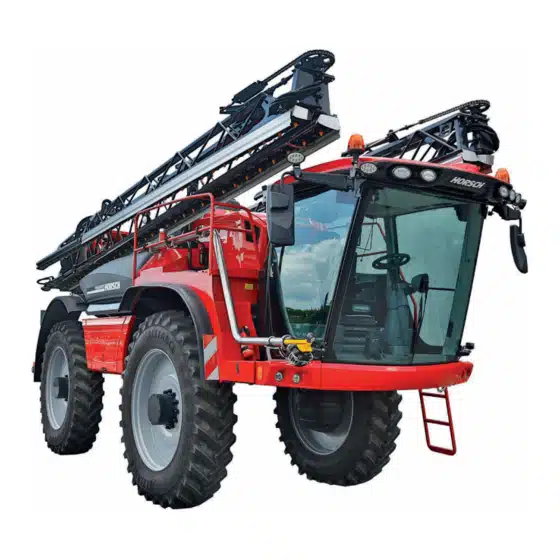
Horsch · Leeb 6.280VL
Horsch Leeb 6.280VL self-propelled sprayer
36 m boom, 6,000 L tank. AgLeader autosteer.
Hydraulically adjustable ground clearance and track width — adapts to crop height.
Weather window: when a treatment works and when it doesn't
Spraying is the only field operation where weather decides the result, not just convenience. These are the limits beyond which we don’t go out into the field.
We check the forecast for your field, not for the region, and tell you honestly if the window is closing. Postponing a treatment by a day is cheaper than doing it for nothing.
Treatments we carry out
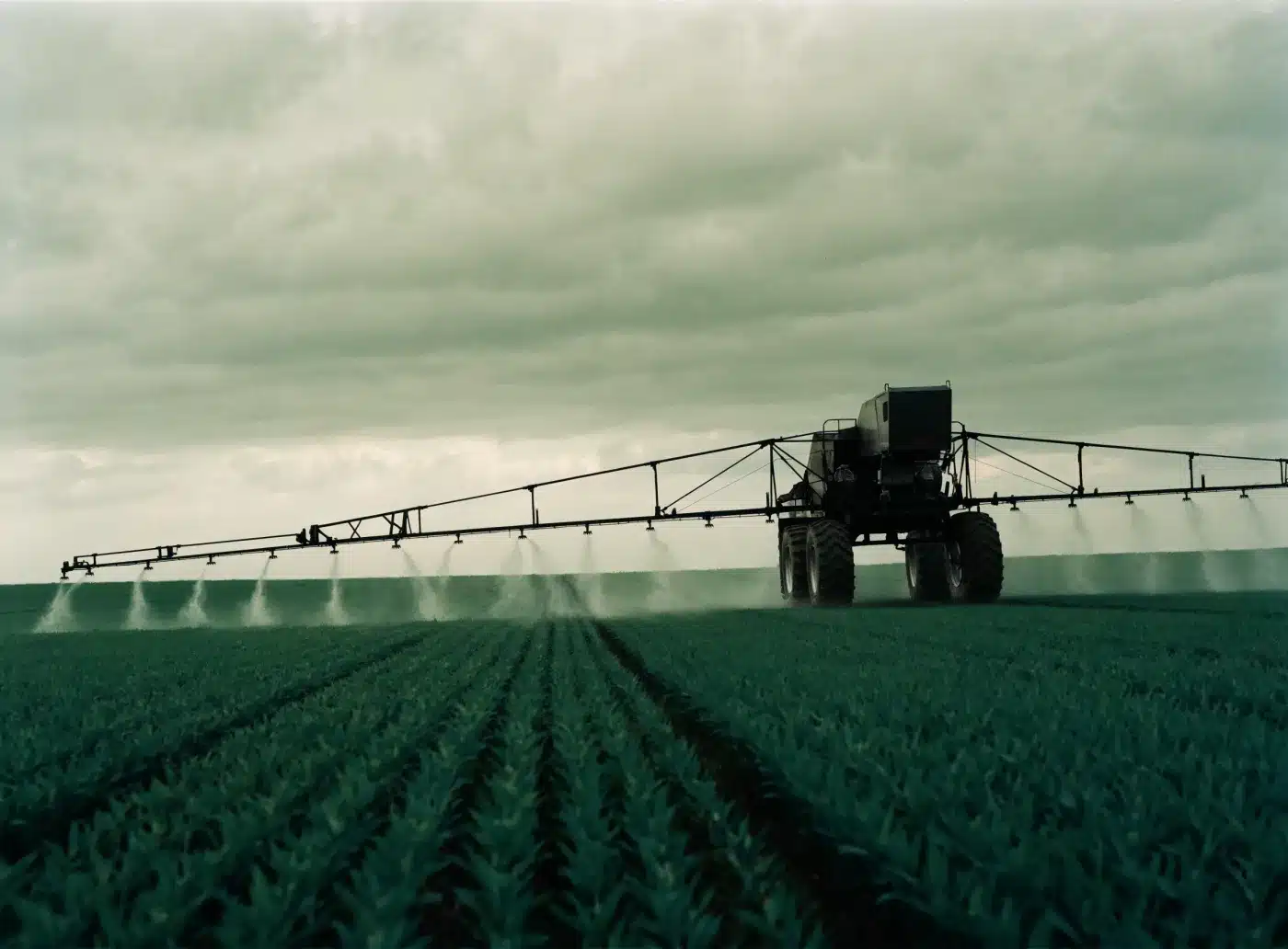
Herbicide protection
Pre-emergence and post-emergence treatments. We work by weed growth stage, not by the calendar: an overgrown weed needs a higher rate and gives a worse result for the same cost.
Working spray volume of 100–200 L/ha depending on weed pressure and the product.
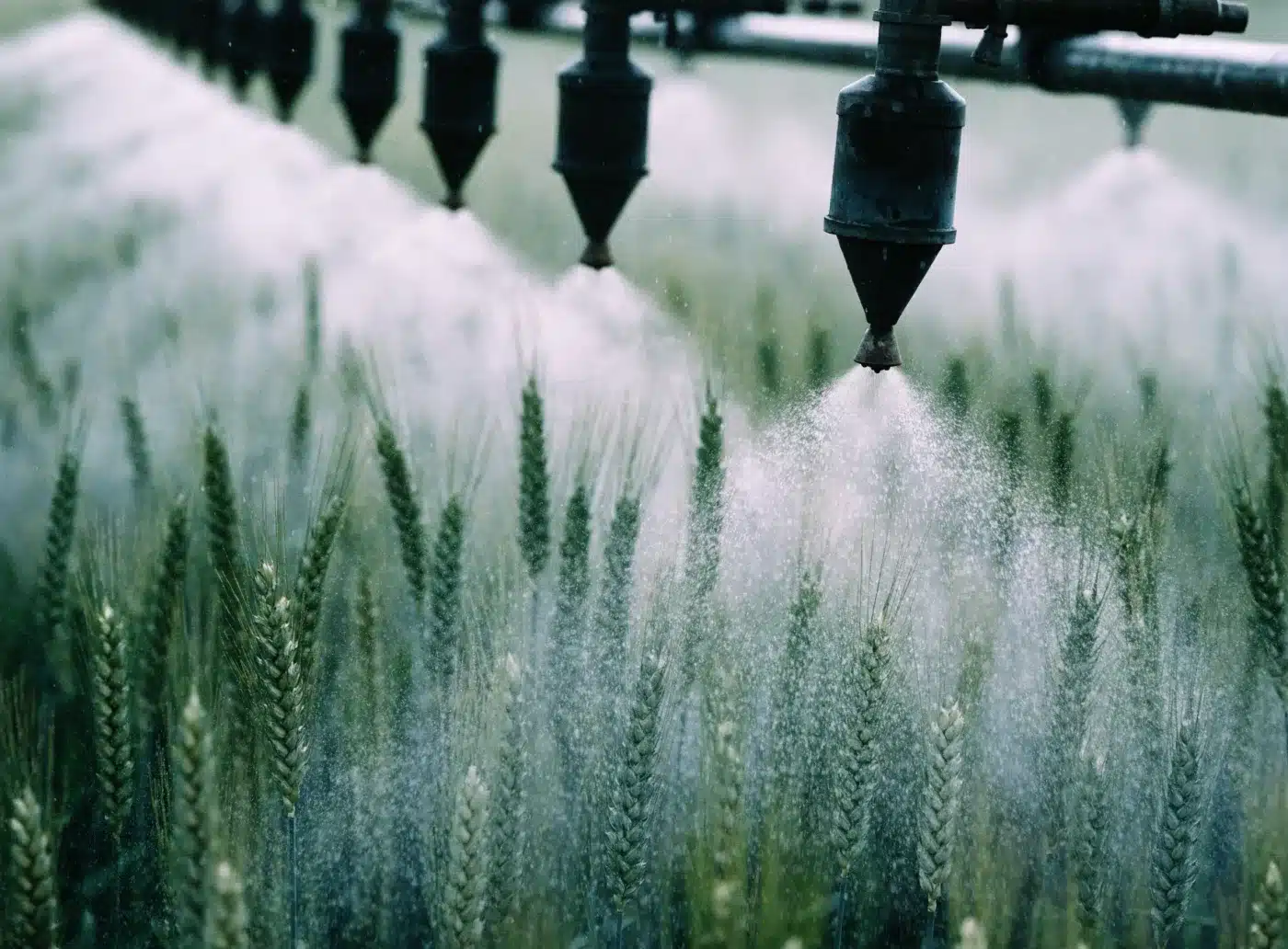
Fungicide treatments
Prevention and treatment of leaf and ear diseases. Coverage is what matters here: the product has to land on the whole leaf surface, so we raise the spray volume to 150–250 L/ha and use a finer droplet.
We often combine it with foliar feeding — UAN, urea, micronutrients — in one tank mix. That’s one pass less over the field.
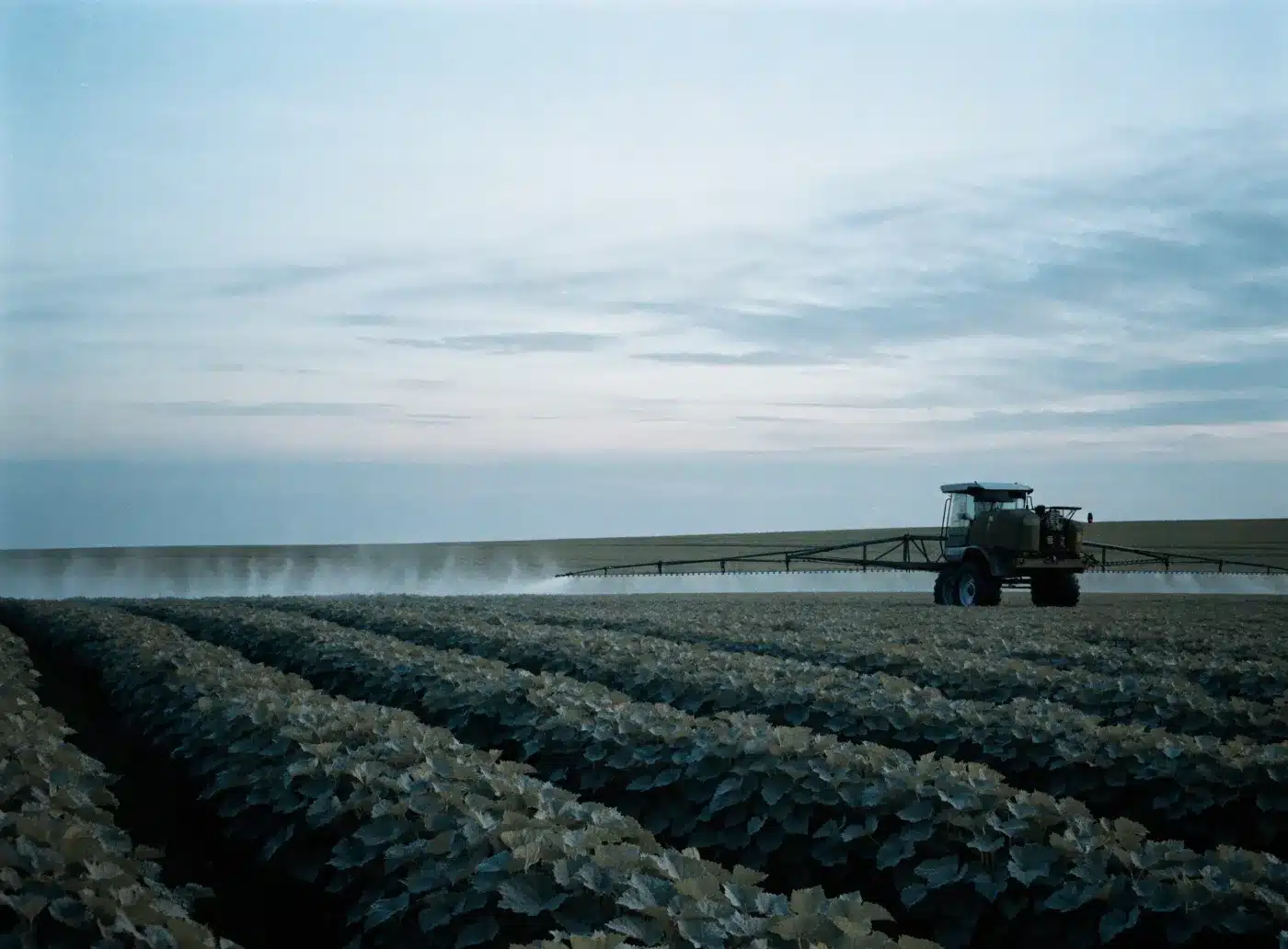
Insecticide treatments
When the pest appears, usually within a tight two-to-three-day window. We go out in the morning or evening, when the insects are active and the bees are not.
During the season we keep a machine on standby so as not to miss this window — it doesn’t wait.
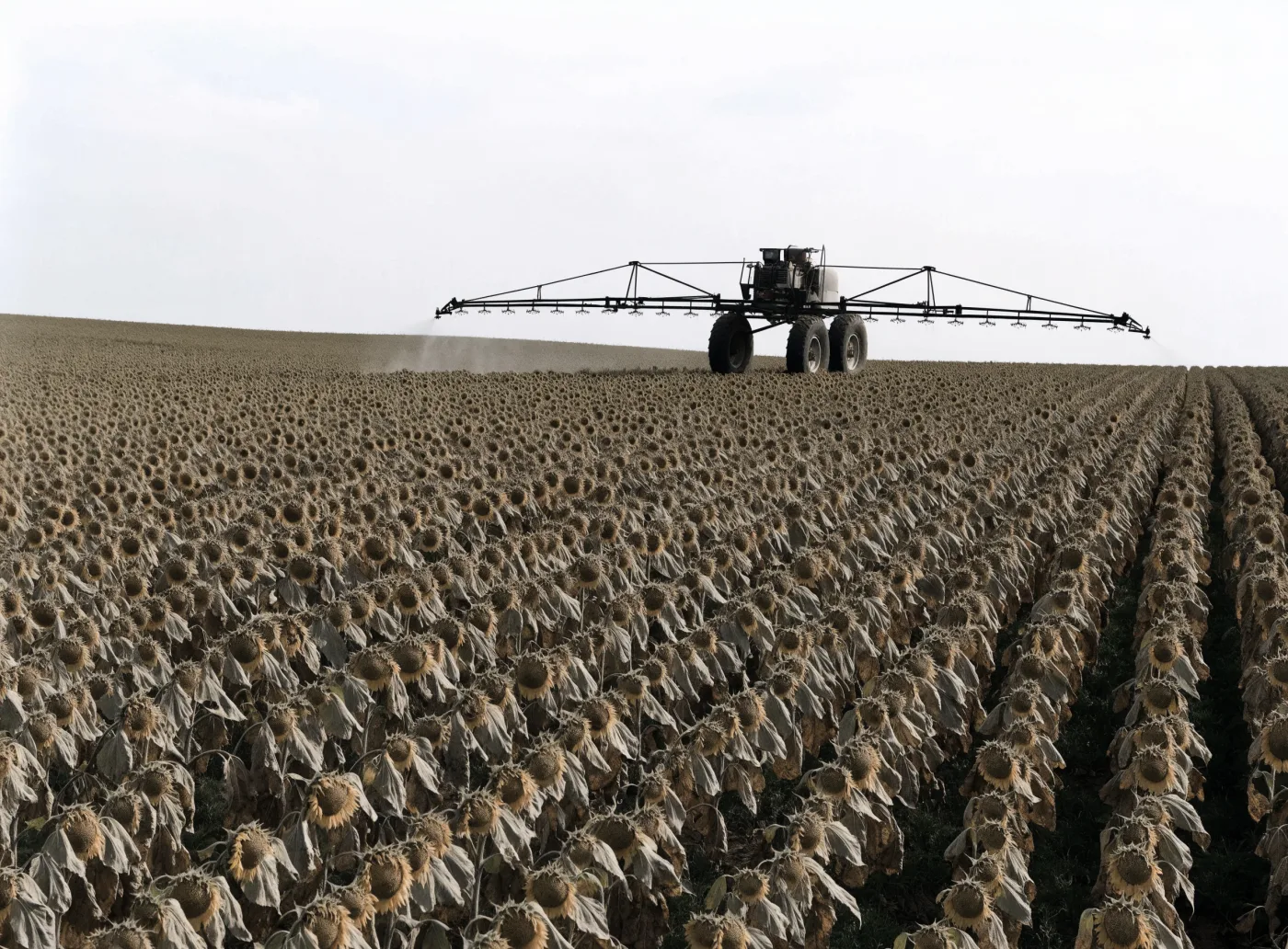
Pre-harvest desiccation
Evening out ripening of sunflower, soybean and rapeseed before harvest.
Gives even moisture in the grain tank, lower combine losses and the chance to go into the field a few days earlier.
How much we cover per shift
Calculated from rated boom width and working speed with a field efficiency of 0.7, which accounts for turns and refilling with spray solution.
The further the water is from the field, the lower the efficiency: refills take more time than the passes themselves. That is why a water source nearby affects timing more than the power of the machine.
How a treatment works
From request to certificate of completed work — five steps. Products and water are agreed before we go out, not in the field.
Request
Crop, area, growth stage and what protection is needed. By phone, in Telegram or through the form.
Agreement
Products, spray volume, tank-mix compatibility and the weather window. We fix the rate per hectare.
Preparing the solution
Filling with water, mixing and agitating the solution. Before going out we check the nozzles for an even spray pattern.
Treatment
The machine follows the autosteer with section control. The rate is logged from the terminal throughout the pass.
Certificate
Treated area and actual product usage. Payment for the hectares in the certificate.
The operator sees the application rate on the terminal throughout the pass — not after it.
What to prepare before the sprayer arrives
Five points that let the sprayer go out into the field straight away instead of waiting half a day.
A full checklist for preparing the field, access roads and logistics is in the article “How to prepare a field for a contractor’s machinery”.
- Products with documents — in the field or in a store nearby. Products are supplied by the client unless agreed otherwise.
- Water for the spray solution — a source near the field. This has the biggest impact on timing: refills take more time than the passes themselves.
- Field boundaries or a map — so the autosteer guides the machine without overlap at edges and wedges.
- Access and a refilling area with room for the self-propelled machine to turn.
- A person who accepts the work in the field and signs the certificate.
If any of this is missing, tell us in advance — we will adjust the schedule or bring water with our own transport.
Why Wester

Our own fleet, not middlemen
Five self-propelled sprayers, named model by model — New Holland, Case Patriot, Horsch Leeb. You know what will arrive in your field before you sign anything

The operator is part of the service
This is not bare rental: the machine arrives with a person who knows how to work with it

The full cycle for the season
Tillage, sowing, fertilizer application, spraying, harvesting — all in one pair of hands. No need to find a separate contractor for each stage and coordinate timing between them

We cover 9 regions
Western and central Ukraine — Khmelnytskyi, Vinnytsia, Ternopil, Rivne, Volyn, Lviv, Ivano-Frankivsk, Chernivtsi and Zhytomyr regions.
Who our clients are
We don’t take every request — machinery and operators are booked for the season in advance. Here is who we work with.
400+
hectares of cultivated area
The minimum scale at which our format pays off for both sides.
9
regions in our service area
Western and central Ukraine — moving the machinery doesn’t eat into the cost of work.

Less than 400 ha? Team up with your neighbours
If several farms nearby put together a combined area of 400+ ha, we come out to the field. One contract, each farm pays for its own hectares.
Questions and answers
Here is what farmers ask most often before their first treatment with us — about products, water and weather.
No, the products are supplied by the client, with documents. The price includes the machine, operator, fuel and transport to the field.
The client’s, and the source should be near the field. The further away the water, the more time goes on refilling — this affects timing more than the boom width.
Based on rated boom width and working speed with a field efficiency of 0.7: the New Holland SP310F does about 410 ha per 12-hour shift, the Case Patriot 4430 about 370 ha, the Horsch Leeb about 360 ha, and the Case Patriot 3330 and 3230 about 310 ha.
Wind above 5 m/s, temperatures above +25 °C, low air humidity and a night-time temperature inversion. In these conditions the product either drifts onto the neighbouring field or doesn’t reach the leaf — the treatment becomes a waste of money.
Yes, if the products are compatible. This saves one pass over the field, which means less soil compaction and lower costs.
400 hectares. If you have less, team up with neighbouring farms: one contract, each pays for its own hectares.
Yes, we work in nine regions of western and central Ukraine. Transport is included in the quote — so the further away the field, the more the volume of work matters.