
Sowing services — from 400 ha
We sow row crops and cereals with our own precision seed drills. Operator, fuel and transport are already included in the price. Western and central Ukraine, payment per sown hectare.
How sowing works
From request to certificate of completed work — five steps. You don’t search for machines one by one or agree on every operation separately.
Request
Crop, area in hectares, field locations and the preferred window. By phone, in Telegram or through the form.
Visit and inspection
We check the condition of the field and the access roads, and tell you straight away whether the drill can go in as is or extra preparation is needed.
Quote and contract
We fix the seeding rate, row spacing, number of shifts and the rate per hectare. You pay for the area, not for hours.
Sowing
The machinery arrives with an operator and fuel. Rate and depth are monitored from the terminal throughout the pass.
Certificate
We record the actual sown area. Payment for the hectares in the certificate.
The operator sees rate and depth on the terminal throughout the pass — not after it.
Seed drills we work with
Our own fleet, no middlemen. Every machine has its own operator.
Precision seeding · 3 technologies
What holds the seeding rate and depth
Three things that make the field emerge evenly and keep seed from being wasted:
Section control
Sections switch off on wedges and strips that are already sown. Without this, turns and sharp corners get double seeding: seed is used twice, and the overly dense strips lodge and ripen later than the rest of the field.
Rate compensation on turns
On a curve the inner sections travel a shorter path than the outer ones. Without compensation the field becomes too dense on the inside and too sparse on the outside. An electric drive on each seed meter holds the set rate across the whole working width.
Automatic downforce control
Coulter pressure adapts to soil density on the move. Seeding depth stays the same on a compacted wheel track and on a loosened patch — so the crop emerges at the same time across the whole field.

Kinze · 3600 ASD
Kinze 3600 ASD row-crop planter
16 rows × 70 cm or 31 rows × 35 cm — maize, sunflower, soybean.
ASD pneumatics, AgLeader SureDrive, 10–12 km/h.
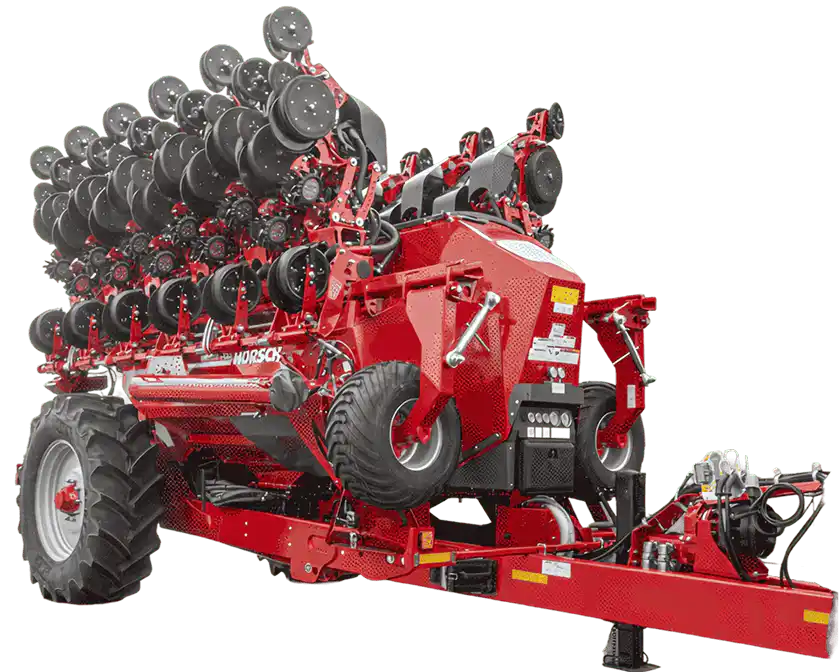
Horsch · Maestro 31 SV
Horsch Maestro 31 SV row-crop planter
16 rows × 70–75 cm or 31 rows × 35 cm — SplitRow system.
AirVac pneumatics, AutoForce, 5,400 L hopper, up to 12 km/h.

Pöttinger · Terrasem
Pöttinger Terrasem seeding combination
Drilling cereals and small seeds, 6 m working width.
Discs, roller and seeding coulters in one pass, up to 15 km/h.
Crops we sow
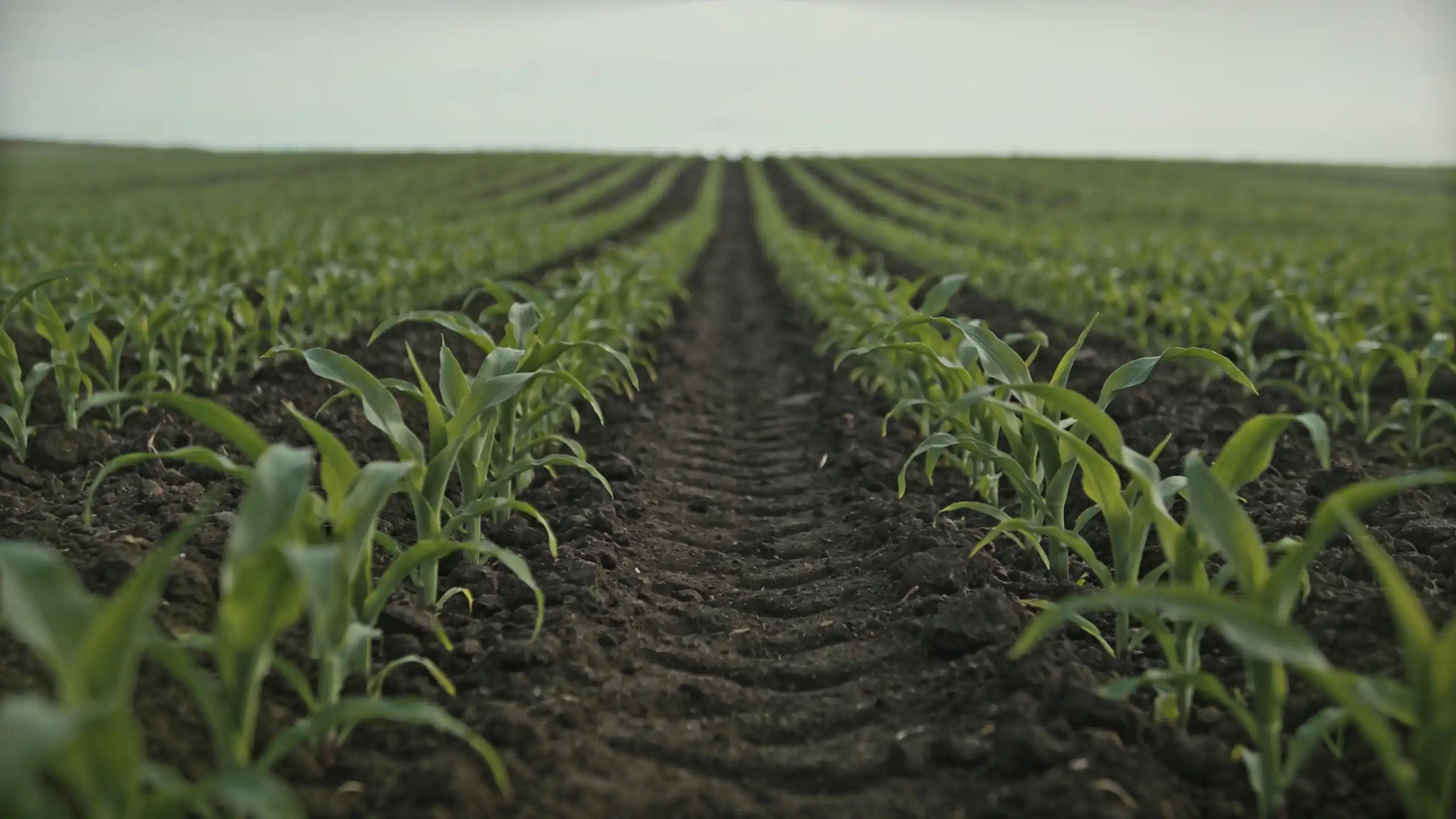
Maize
Row spacing 70–75 cm, seeding depth 5–7 cm. We work with the Kinze 3600 ASD or Horsch Maestro 31 SV in a 16-row configuration.
Row-crop sowing depends on singulation accuracy: a skip or a double in the row means one plant less per square metre, and there is nothing to make up for it later.
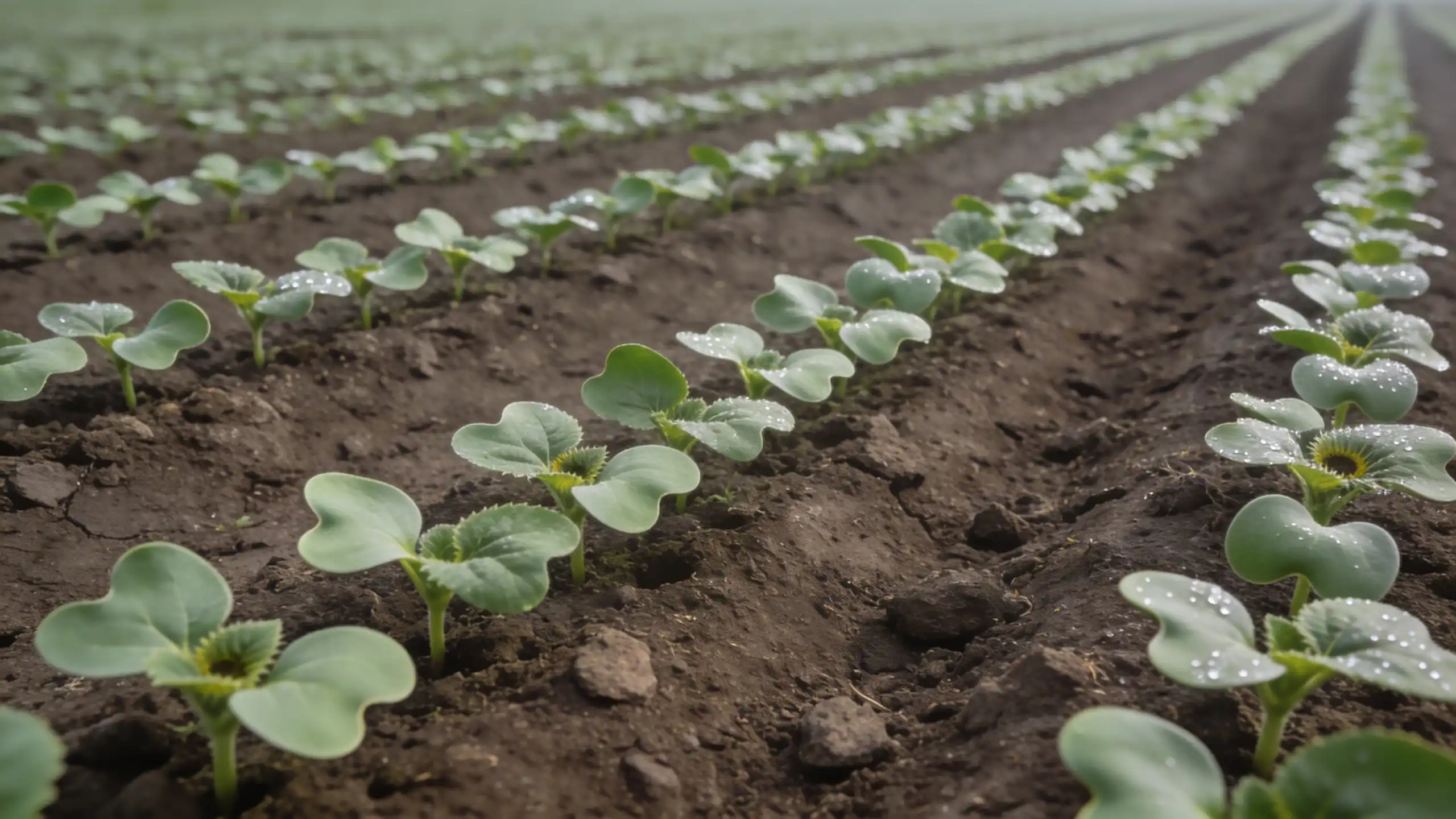
Sunflower
70 cm row spacing on the Kinze or 35–37.5 cm on the Horsch for higher-density schemes. Depth 4–6 cm.
Both machines switch between configurations without changing the drill — you choose the scheme, not the machinery available in the fleet.
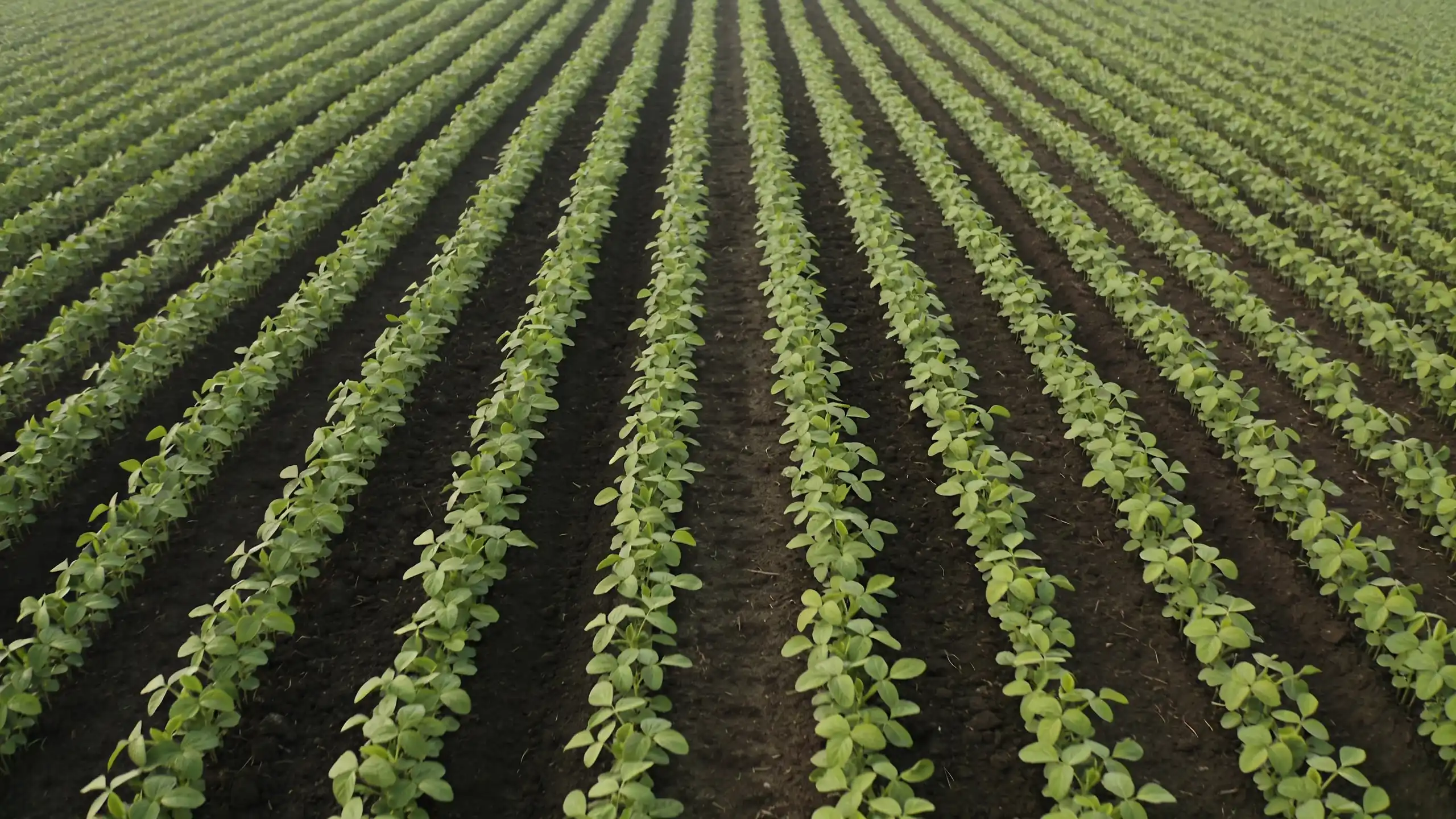
Soybean and rapeseed
Row spacing 35–37.5 cm. Soybean at a depth of 3–5 cm, rapeseed at 1.5–3 cm.
Small rapeseed seed doesn’t forgive variation in depth: half a centimetre deeper and emergence is delayed by several days. This is where automatic coulter downforce control comes in.
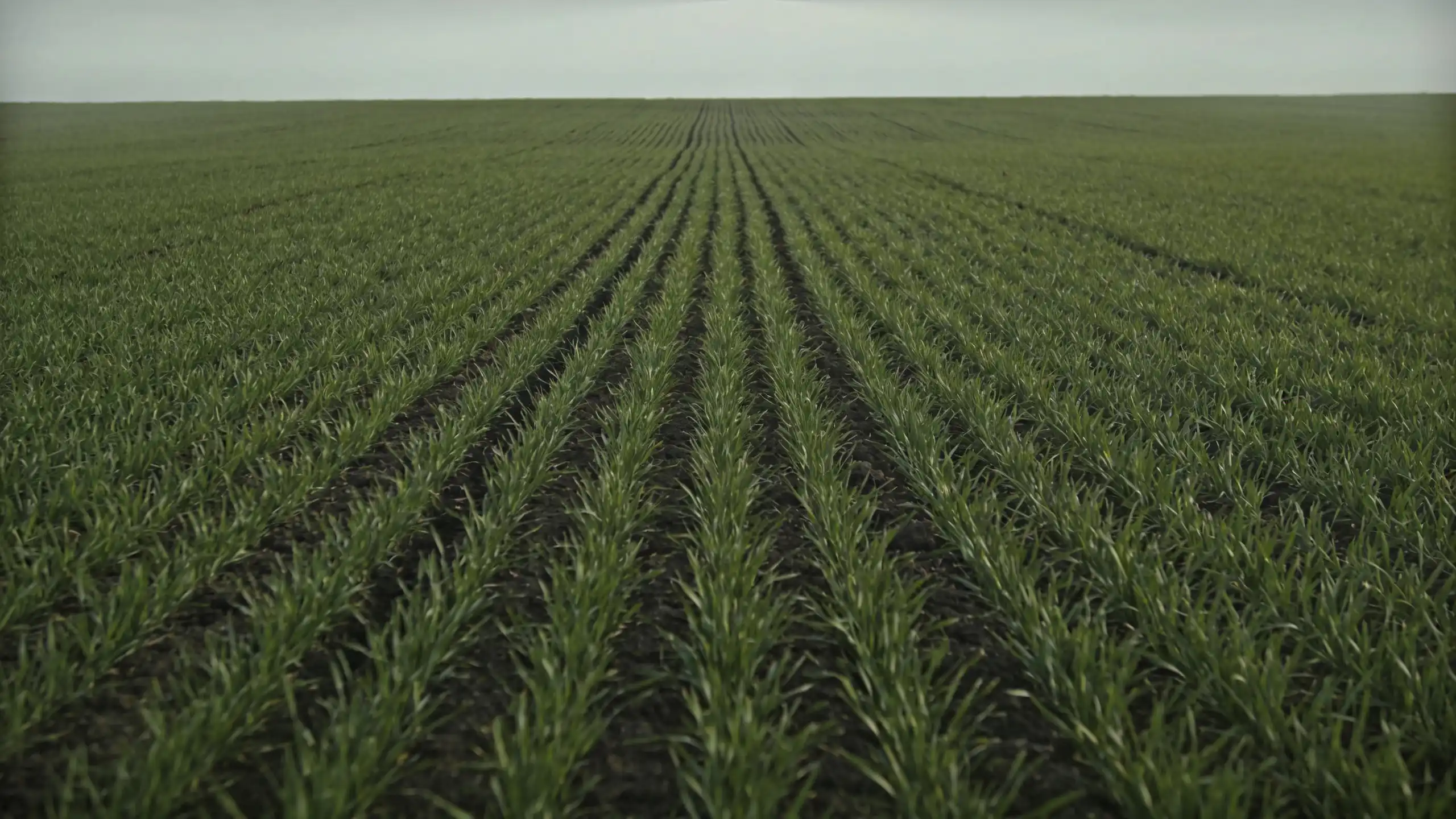
Cereals — wheat, barley, oats
Drilling with a Pöttinger Terrasem combination, 6 m working width, depth 3–5 cm.
The Terrasem prepares the soil and sows in one pass — no separate pre-sowing cultivation is needed for cereals.
When to sow: timing and soil temperature
It is soil temperature at seeding depth that decides, not the calendar. The windows below are a guide for western and central Ukraine.
No two years are the same. We hold the window to fit your schedule and go out to the field when the soil has warmed up, not when the date in the plan arrives.
What to prepare before the seed drill arrives
Five points that let the seed drill go out into the field straight away instead of waiting half a day.
A full checklist for preparing the field, access roads and logistics is in the article “How to prepare a field for a contractor’s machinery”.
- Seed in the field or in a store nearby — treated, with documents. Seed treatment is not part of the service unless agreed separately.
- A field prepared for sowing. If not, we take on the preparation as a separate operation or go in with the Terrasem in one pass.
- Access for machinery and room to turn at the field edge.
- A defined seeding rate or readiness to agree it on site with the operator.
- A person who accepts the work in the field and signs the certificate.
If any of this is missing, tell us in advance — we will adjust the schedule or take on the preparation ourselves.
Why Wester

Our own fleet, not middlemen
The seed drills are ours and named model by model — Kinze, Horsch, Pöttinger. You know what will arrive in your field before you sign anything

The operator is part of the service
This is not bare rental: the machine arrives with a person who knows how to work with it

The full cycle for the season
Tillage, sowing, fertilizer application, spraying, harvesting — all in one pair of hands. No need to find a separate contractor for each stage and coordinate timing between them

We cover 9 regions
Western and central Ukraine — Khmelnytskyi, Vinnytsia, Ternopil, Rivne, Volyn, Lviv, Ivano-Frankivsk, Chernivtsi and Zhytomyr regions.
How much sowing costs per hectare
There is no single price per hectare — it depends on several factors:
- Crop and row spacing. Row-crop sowing at 70 cm and drilling cereals run at different speeds.
- Seeding rate. The seed is yours, but the rate affects the number of hopper refills and the time in the field.
- Area and shape of the fields. One 500 ha field costs less than five 100 ha fields: fewer turns, fewer moves.
- Field condition. If extra preparation is needed, it is a separate operation, and we tell you before the contract, not in the certificate.
- Timing. Work in a peak week costs differently from work planned in advance.
Tell us the crop, area and region — we will calculate it for your specific hectares and give you a figure.
Calculate for my hectaresTell us the crop, area and region — we will calculate it for your specific hectares and give you a figure.
Who our clients are
We don’t take every request — machinery and operators are booked for the season in advance. Here is who we work with.
400+
hectares of cultivated area
The minimum scale at which our format pays off for both sides.
9
regions in our service area
Western and central Ukraine — moving the machinery doesn’t eat into the cost of work.

Less than 400 ha? Team up with your neighbours
If several farms nearby put together a combined area of 400+ ha, we come out to the field. One contract, each farm pays for its own hectares.
Questions and answers
Here is what farmers ask most often before their first season with us — about seed, timing and seeding rate.
No, the seed is supplied by the client. The price includes machinery, operator, fuel and transport to the field. Treated seed must be in the field before work starts.
400 hectares. If you have less, team up with neighbouring farms: one contract, each pays for its own hectares.
Based on rated working width and working speed with a field efficiency of 0.7: the Kinze 3600 ASD does about 90 ha per 12-hour shift, the Horsch Maestro 31 SV up to 110 ha, and the Pöttinger Terrasem about 75 ha, but together with soil preparation.
Yes. The Kinze and Horsch work in two row-spacing configurations: 70–75 cm for maize and sunflower and 35–37.5 cm for soybean and rapeseed. Switching doesn’t require a different machine.
The Pöttinger Terrasem covers preparation and sowing in one pass. If deeper tillage is needed, we do it as a separate operation.
An electric drive on each seed meter is controlled from the terminal: section control on wedges, rate compensation on turns and logging of the actual rate throughout the pass.
Yes, we work in nine regions of western and central Ukraine. Transport is included in the quote — so the further away the field, the more the volume of work matters.