
Combine harvesting — from 400 ha
We harvest cereals, oilseeds and maize with our own combines and operators. Massey Ferguson Ideal 7 and John Deere S780, with straw baled in the same pass. Western and central Ukraine, payment per harvested hectare.
When farms come to us
Harvest means 10–14 days per crop. Here are three situations in which farms call us.
Your own combine can't keep up with the window
If your own machine covers 40 hectares a day and you have 1,200, harvesting will stretch over a month. During that time the grain loses both moisture and weight, and the field is waiting for the next operation.
You have a combine, but it's old
The difference between a ten-year-old machine and a modern one is not speed but losses behind the thresher. On a thousand hectares of wheat, one percent of losses is sixty tonnes of grain left in the field.
You need to cover the peak, not the whole season
We come in with one or two machines alongside yours on specific days — when the window is narrow and the count is in days, not weeks.
If your case is not one of these three, write to us anyway. We will tell you honestly whether it makes sense before we even go out to the field.
What harvesting includes
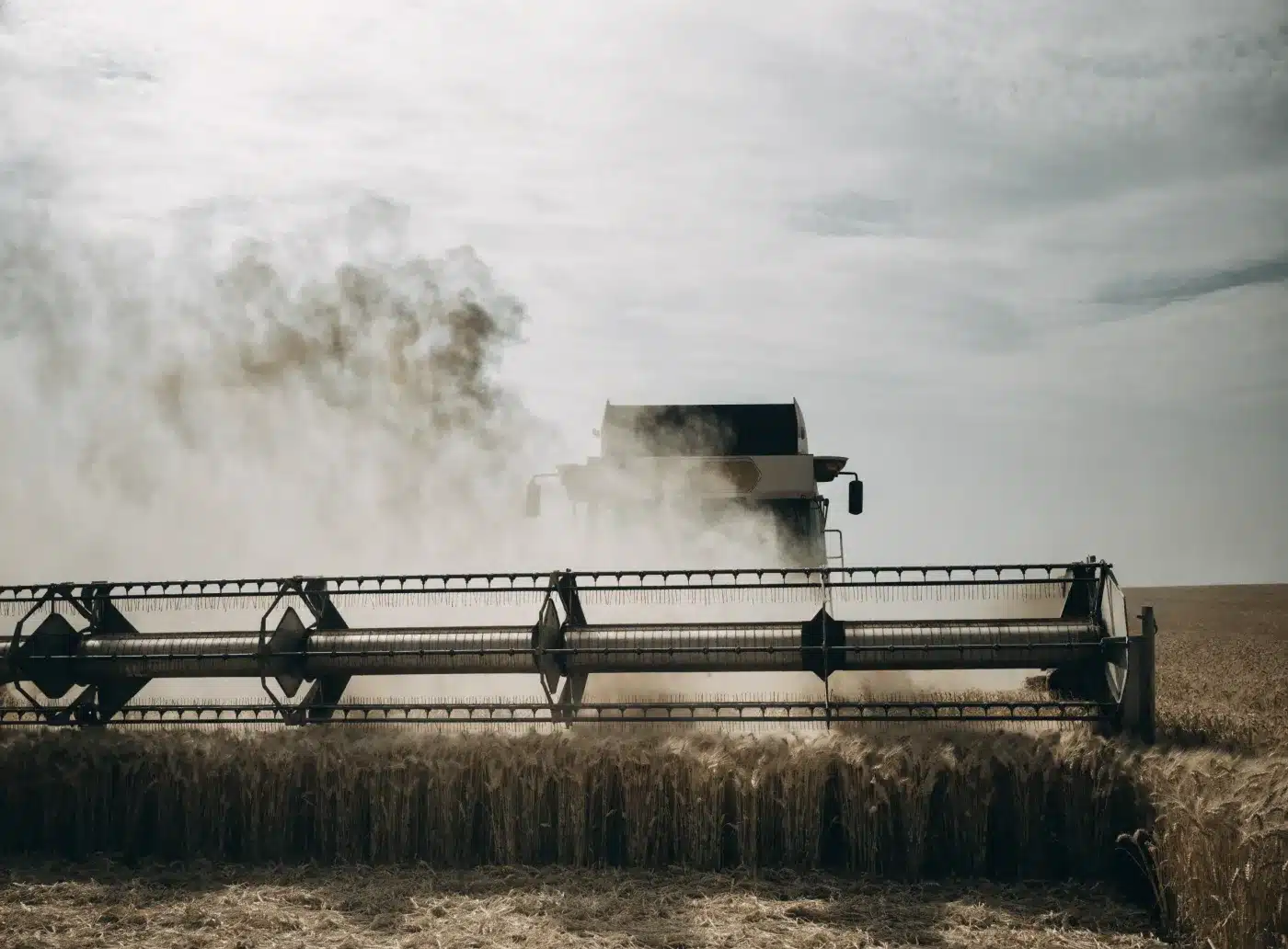
Cereals — wheat, barley, rye
Wheat, barley, rye — the bulk of the work.
The combine is set up for the crop and the actual state of the stand: lodging, weediness, straw moisture. We change the settings in the field rather than leaving the ones we arrived with.
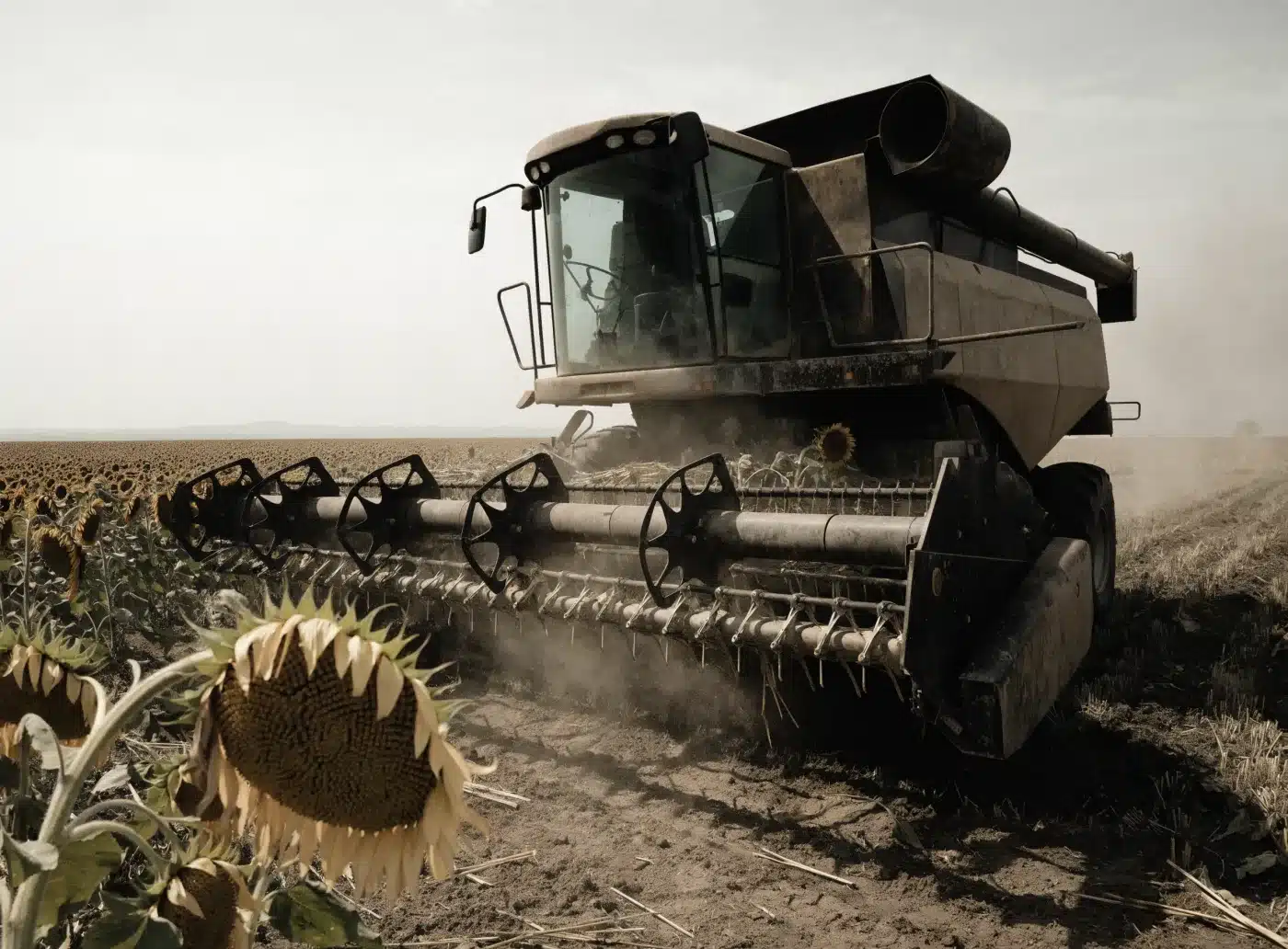
Oilseeds — sunflower, rapeseed, soybean
Sunflower, rapeseed, soybean — separate headers and separate settings.
Rapeseed shatters at the touch of the header, sunflower needs a different thresher clearance. We re-adjust for the crop rather than leaving it “as it was on wheat”.
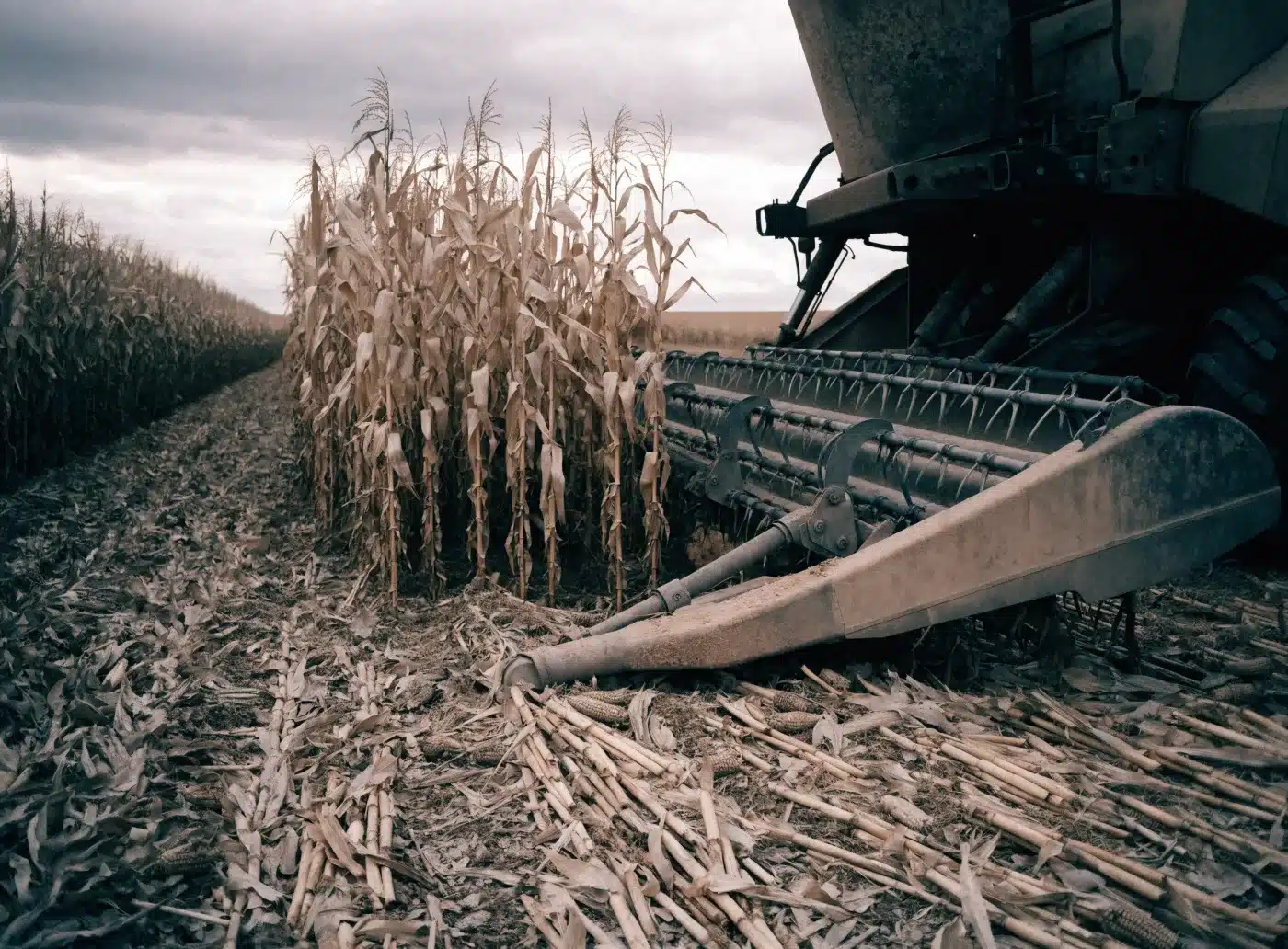
Grain maize
A separate row-crop header and separate threshing settings.
We come in when moisture allows threshing without cracking the grain. Drying is on the client’s side.
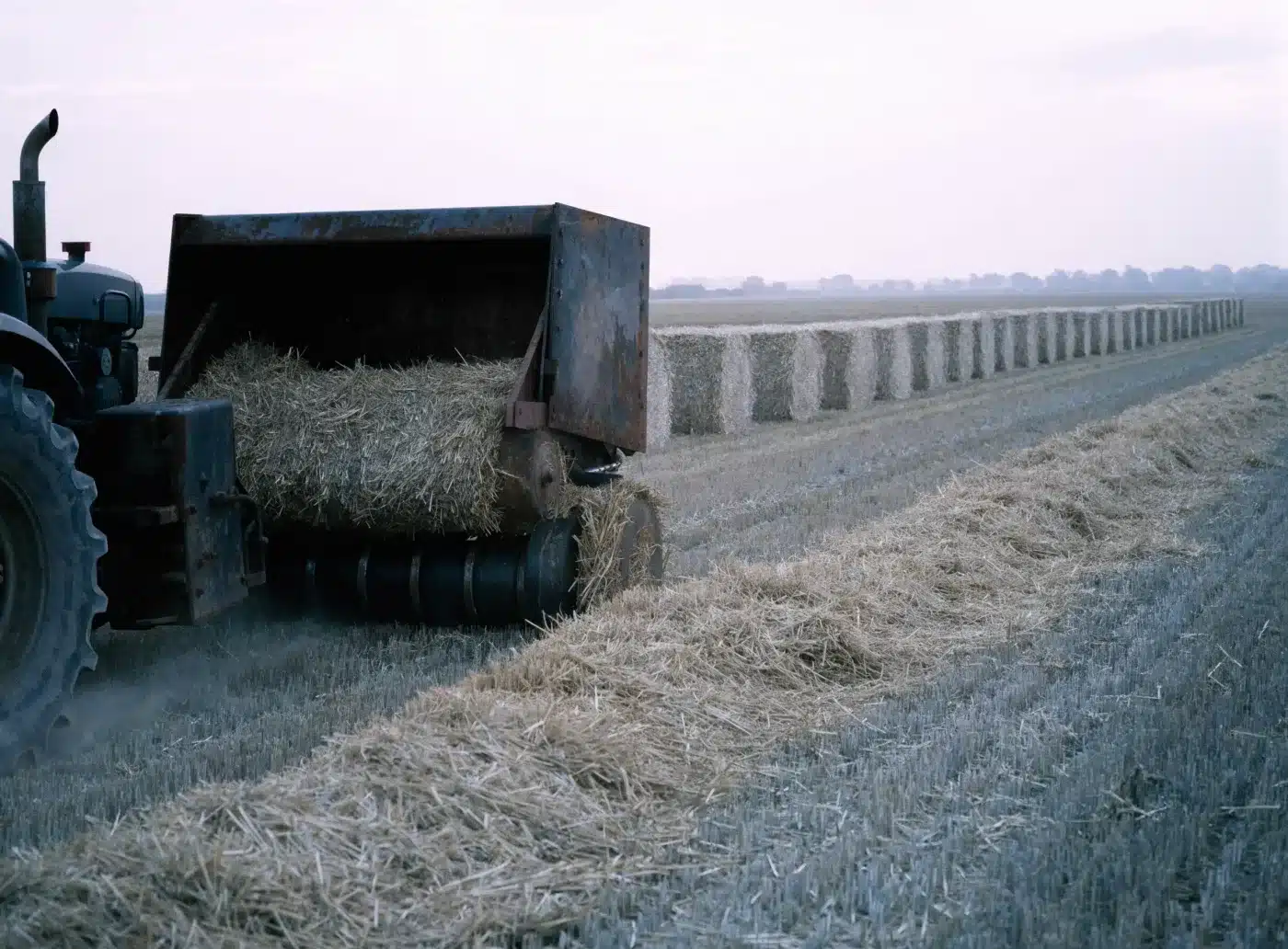
Straw baled right behind the combine
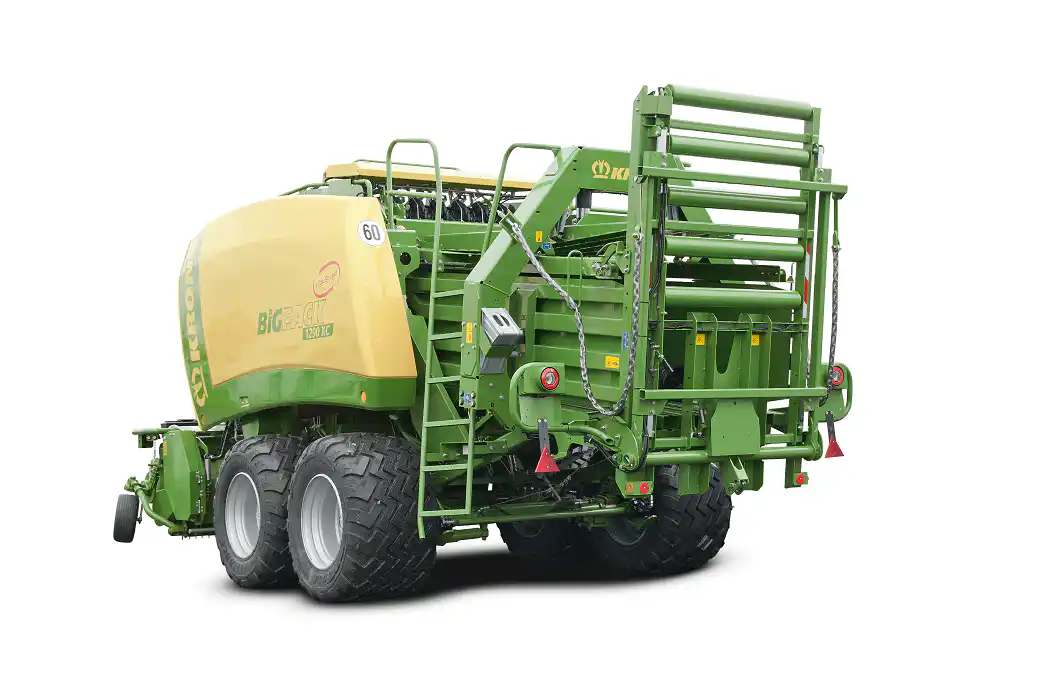
The Krone Big Pack 1290 XC presses straw into large rectangular bales right behind the combine, while the field is not yet taken by the next operation.
One less separate pass over the field and one less round of soil compaction.
Combines we work with
Our own fleet, no middlemen. Every machine has its own combine operator.
Flagship · 451 hp
Massey Ferguson Ideal 7 — the flagship of our fleet
A 9.8 L AGCO Power engine with 451 horsepower, a 12,500-litre grain tank expandable to 17,100, and a header up to 9.2 metres. Three things that let this machine close the window faster:
Wide header — fewer passes
A 9.2-metre header versus 7.6 on the other machine — almost a quarter fewer runs and turns on the same area. On large, level fields this difference saves several hours for every hundred hectares.
12,500 L grain tank — longer runs between unloads
A full tank of wheat is about nine tonnes. At a yield of 6 t/ha it lasts roughly one and a half hectares, or twenty minutes of work. A bigger tank is a longer buffer when transport is running late.
Threshing set up for the actual field
Lodged crop, damp straw, a weedy field — three different settings for speed and clearances. The operator changes them in the field based on measured losses. Massey Ferguson Ideal 7 in the catalog.

John Deere · S780
John Deere S780
A 13.6 L PowerTech engine with up to 473 hp, a 14,100-litre grain tank and a header up to 7.6 metres.
The largest grain tank in our fleet with a narrower header — the machine for fields with a long haul to the grain yard.
Krone · Big Pack 1290 XC
Krone Big Pack 1290 XC
120×90 cm chamber, bale length 1.0–2.7 m, 2.35 m pick-up. Six double-knot knotters.
Presses straw right behind the combine, before the swath picks up moisture.
Power · 5 tractors
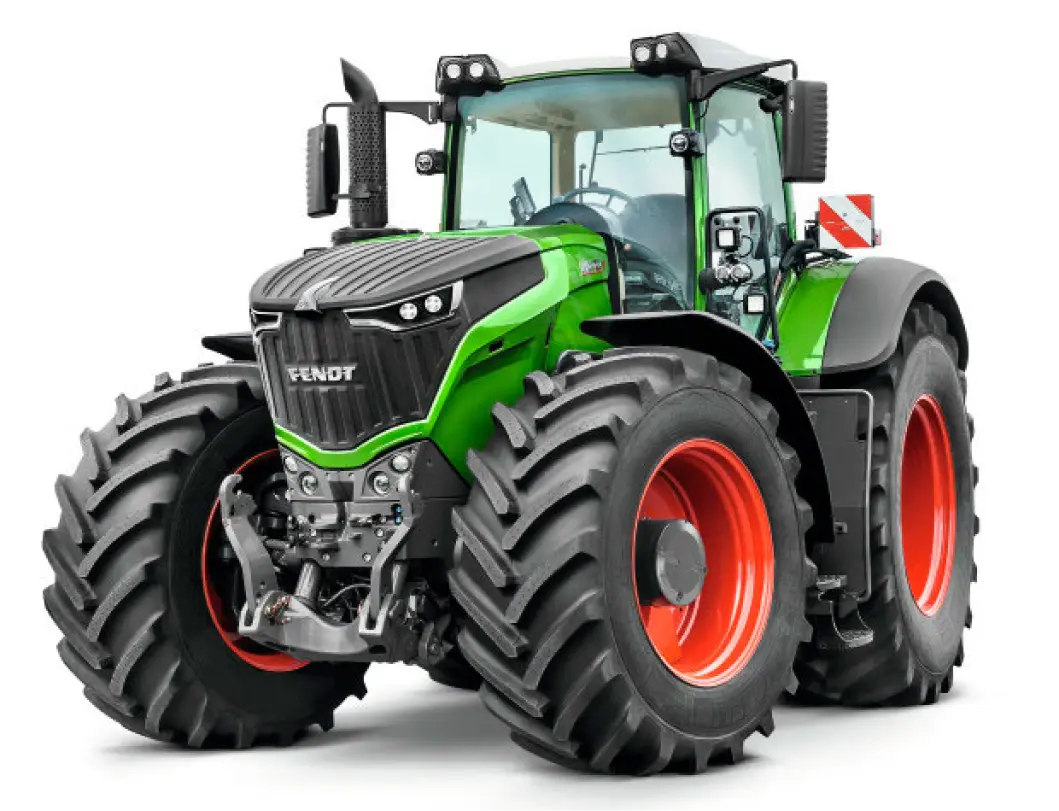
Tractors for the baler
Fendt Vario 1050 and 1038, Massey Ferguson 8737 and 8690, Valtra T234.
The baler needs a tractor of at least 143 hp — we have our own, so you don’t need to find one separately.
How much we cover per shift
Calculated from the header width and a working speed of 6–7 km/h with a field efficiency of 0.75, which accounts for turns and unloading.
The actual figure depends on yield: the more grain per hectare, the more often the combine stops to unload and the slower it moves across the field.
Grain logistics — the real bottleneck of harvest
People ask about combines first. But it’s not the combine that stops the harvest.
A full checklist for preparing the field, access roads and logistics is in the article “How to prepare a field for a contractor’s machinery”.
Massey Ferguson Ideal 7, 12,500 L grain tank, working rate 4.5 ha/h
- Transport is counted in turnaround, not in trucks. If the haul to the grain yard is 15 kilometres, one truck makes a round trip in an hour. So one combine in the field needs at least three trucks on the road.
- An idle combine costs more than an idle truck. An hour of waiting is four and a half hectares you didn't harvest within the window. There is nothing to win them back with at the end of harvest.
- A bigger tank is a longer buffer. That is why the John Deere S780 with its 14,100 L tank is sometimes better value than a wider header: it can wait longer when transport is late.
Before going out, we ask not only about the area but also how many trucks you have and how far the grain yard is. If transport is short, it’s better to know before harvest than on day three.
How harvesting works
From request to certificate of completed work — five steps. Fields, haul distance and field order are agreed before we go out, not on site.
Request and fields
Crop, area, expected yield, field locations.
Agreement before we go out
Haul distance to the grain yard, number of trucks, order of fields. We fix the rate per hectare.
Setup on the first run
Thresher speed, clearances, cutting height — set for the actual field. We check losses with a frame.
Work
The operator keeps the settings during the shift and adjusts them when the field or weather changes.
Certificate of completed work
Harvested hectares from the combine monitor. Payment for the hectares in the certificate.
Harvested hectares are taken from the combine monitor — and go into the certificate.
Why Wester

Our own fleet, not middlemen
Massey Ferguson Ideal 7, John Deere S780 and a Krone baler. You know what will arrive in your field before you sign anything

The operator is part of the service
This is not bare rental: the machine arrives with a person who knows how to work with it

We measure losses, we don't just promise
A frame on the first run, grain counted on the ground — and settings for your field, not the previous one

We cover 9 regions
Western and central Ukraine — Khmelnytskyi, Vinnytsia, Ternopil, Rivne, Volyn, Lviv, Ivano-Frankivsk, Chernivtsi and Zhytomyr regions.
How much harvesting costs per hectare
There is no single price per hectare — it depends on several factors:
- Crop. Wheat, sunflower and maize mean different headers, different speeds and different time per hectare.
- Yield. The more grain, the more often the combine unloads and the slower it moves across the field.
- Condition of the stand. A lodged crop is harvested twice as slowly as a standing one — and with higher losses.
- Area and shape of the fields. One 500 ha field costs less than five 100 ha fields: fewer moves and turns.
- Straw. Baling is charged separately from threshing.
When exactly to go out to the field and at what moisture is covered separately in the article Wheat harvest: timing, grain moisture and the combine.
Tell us the crop, area and expected yield — we will calculate it for your specific hectares and give you a figure.
Who our clients are
We don’t take every request — machinery and operators are booked for the season in advance. Here is who we work with.
400+
hectares of cultivated area
The minimum scale at which our format pays off for both sides.
9
regions in our service area
Western and central Ukraine — moving the machinery doesn’t eat into the cost of work.

Less than 400 ha? Team up with your neighbours
If several farms nearby put together a combined area of 400+ ha, we come out to the field. One contract, each farm pays for its own hectares.
Questions and answers
Here is what farmers ask most often before their first harvest with us — about losses, transport and straw.
The Massey Ferguson Ideal 7 does about 54 ha per 12-hour shift, the John Deere S780 about 44 ha. That is based on header width and working speed with a field efficiency factor; the actual figure depends on yield and on whether transport keeps up.
The client. The combine needs a truck to unload into roughly every twenty minutes — that is why we agree the number of trucks and the haul distance before we go out.
When the grain can be threshed without cracking and without clogging the sieves. Specific timing and moisture figures are covered in our article on wheat harvest. Drying is in any case on the client’s side.
With a frame on the first run: one square metre behind the thresher, counting the grain on the ground. Based on the result we adjust speed and clearances. We repeat the measurement when the field or crop changes.
Yes, with a Krone Big Pack 1290 XC baler into large rectangular 120×90 cm bales. Baling is charged separately from threshing.
400 hectares. If you have less, team up with neighbouring farms: one contract, each pays for its own hectares.
Yes, we work in nine regions of western and central Ukraine. Transport is included in the quote — so the further away the field, the more the volume of work matters.