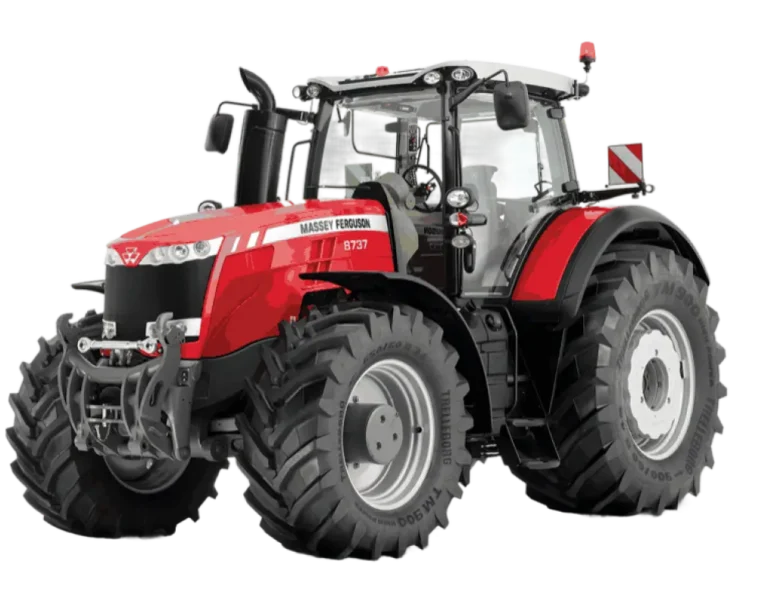
Combine harvester Massey Ferguson Ideal 7 for rent with an operator — the flagship of our fleet for harvesting cereals, oilseeds and grain maize. The widest header in our fleet: almost a quarter fewer runs and turns on the same area, so on large, level fields the Ideal 7 closes the harvest window faster. We work on areas from 400 ha in nine regions of western and central Ukraine, payment per harvested hectare.
What we harvest
A wide header shows its best on large fields — but the Ideal 7 works with all the main crops.Wheat, barley, rye
The flagship’s main job: a 9.2 m cut on level fields — fewer runs and turns for every hundred hectares.
Sunflower, rapeseed, soybean
The operator sets speed and clearances for the crop and checks losses with a measurement on the first run.
Grain maize
We go into the field when the grain can be threshed without cracking or clogging the sieves.
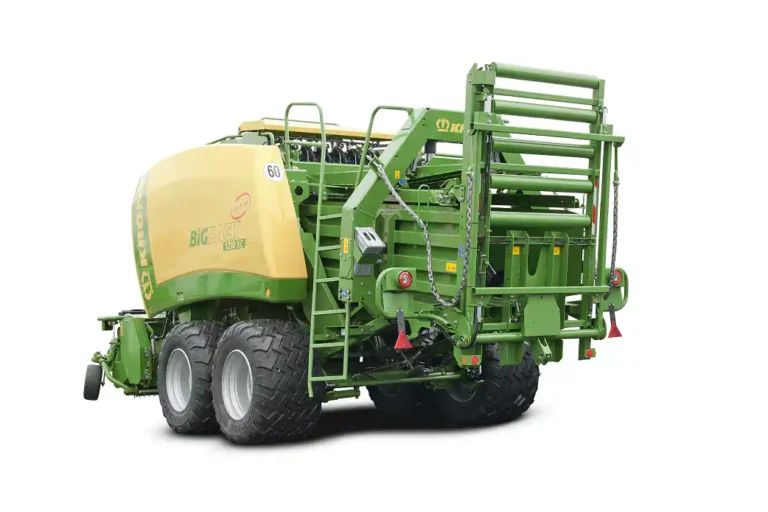
Lodged crop, damp straw and a weedy field — three different settings. The operator changes them in the field based on measured losses, and if needed we bale the straw Krone Big Pack 1290 XC.
How much it harvests per shift
Calculated from header width and working speed with a field efficiency of 0.7.A 9.2 m header versus 7.6 m on the other machine — on large, level fields that saves several hours for every hundred hectares. The actual figure depends on yield, the condition of the stand and whether transport keeps up.
Ideal 7 or S780: which to choose
Two combines in our fleet — for different conditions.
- Header
- up to 9.2 m
- Grain tank
- 12,500 L (up to 17,100)
- Per shift
- ~54 ha
Best forlarge, level fields where transport keeps up

- Header
- up to 7.6 m
- Grain tank
- 14,100 L
- Per shift
- ~44 ha
Best forfields with a long haul to the grain yard when trucks are few
What the price includes
This is not bare rental: the machine arrives with a person who knows how to work with it. Our own combine
No middlemen — you know what will arrive in your field.
 Combine operator
Works on this machine every day and knows its settings.
 Loss control
A frame on the first run, settings for your field.
 Fuel and transport
Already included in the price per hectare.
How much harvesting costs per hectare
Payment is per harvested hectare, not per hour of combine work. The rate depends on:Crop and header
Cereals, oilseeds and maize are harvested at different speeds and with different equipment.
Yield
At 6 t/ha the grain tank fills in about 20 minutes — the higher the yield, the more often the combine unloads.
Lodged crop and weeds
A difficult stand is harvested more slowly and needs more precise thresher settings.
Size and shape of the fields
A wide header pays off best on large, level fields: the fewer moves, the lower the rate.
Send us the crop, area and expected yield — we will calculate the cost for your fields. More about harvest on the page harvesting.
Where we work
From 400 ha. Less? Team up with neighbours — one contract, each pays for its own hectares.Western and central Ukraine — moving the machinery doesn’t eat into the cost of work.
- Khmelnytskyi
- Lviv
- Vinnytsia
- Ternopil
- Rivne
- Volyn
- Zhytomyr
- Chernivtsi
- Ivano-Frankivsk
Questions and answers
Call or write to us — we will reply within one business day and calculate the cost for your hectares.
How much does it cost to rent a Massey Ferguson Ideal 7 combine?
Payment is per harvested hectare. The price depends on the crop, yield, condition of the stand and field area. Send us these details and we will give you the exact cost for your farm.
Can I rent a combine without an operator?
No, the combine works only with our operator — it’s rental “with a crew”. The operator works on this machine every day, knows its settings and is responsible for threshing quality.
How many hectares does the Ideal 7 harvest per day?
About 54 ha per 12-hour shift, or ~4.5 ha per hour. Actual output depends on yield and on whether transport arrives in time for unloading.
How often does the combine need a truck to unload into?
A full grain tank holds about 9 tonnes of wheat; at 6 t/ha it lasts roughly 20 minutes of work. That is why we agree the number of trucks and the haul distance before we go out.
How do you measure grain losses?
With a frame on the first run: one square metre behind the thresher, counting the grain on the ground. Based on the result the operator adjusts speed and clearances and repeats the measurement when the field or crop changes.
What is the minimum area for an order?
From 400 ha. If you have less, team up with neighbouring farms: one contract, each pays for its own hectares.
Crop, area and region — we will quote the rate per hectare and when we can be in your field.