Why treat at all — and what happens when you don’t
This article is for farmers and agronomists growing winter or spring wheat who want to understand when a fungicide treatment really pays off and when the money could have been saved.
Last year one of our clients in the Khmelnytskyi region skipped the second fungicide treatment — “there was no window”. The result: septoria on the upper leaves before heading, with a yield loss by his own estimate of about 0.4–0.5 t/ha. Even at a wheat price of 5,000 UAH/t that’s minus 2,000–2,500 UAH per hectare. And the cost of the treatment — 600–800 UAH at most.
The maths is simple. But for it to work, it’s not enough just to go out into the field — you have to go out on time and do everything right.
When to go out: growth stages and diseases
Wheat needs protection at several critical moments, and each one deals with its own problem.
First treatment: stem elongation (BBCH 31–33)
This is the most important treatment for protecting the lower and middle leaves — the ones that form the assimilating surface. The main targets here are powdery mildew and yellow rust, which develop exactly during this period.
If you miss the first stem elongation treatment, you won’t be able to catch up later: the lower leaves are already infected, and a fungicide won’t help them.
Second treatment: flag leaf — start of heading (BBCH 37–51)
The most crucial point of the season. The flag leaf and the leaf below it provide up to 70% of the assimilates going into the grain. This is where you need to protect against septoria, brown rust and fusarium head blight.
A delay of 5–7 days from the optimal stage, and you’re no longer protecting but treating. And treating leaf diseases with fungicides after they’ve spread is much less effective than preventing them.
Important: The optimal temperature for applying most fungicides on wheat is from +10°C to +25°C. Below +8°C the product is poorly absorbed by the plant; above +28°C it evaporates from the leaf surface too quickly.
Approximate timing for Podillia and the central regions
Stage | Approximate timing | Main diseases |
Stem elongation (BBCH 31–33) | end of April — early May | powdery mildew, yellow rust |
Flag leaf (BBCH 37–39) | mid — late May | septoria, brown rust |
Start of heading (BBCH 51–55) | late May — early June | fusarium head blight |
The most common mistakes in fungicide treatment
In ten years of work we’ve seen them more than once. Here are the ones that come up most often.
Being late with the first treatment. “Let’s wait a bit longer” — and the stage is missed. The disease is already there, and at best the fungicide will stop it spreading but won’t restore tissue that’s already affected.
Water volume too low. Some farms try to save time and set 80–100 L/ha. For fungicides on wheat the recommended volume is 150–200 L/ha. Less means poorer coverage and weaker protection.
Spraying in the wind. At wind speeds above 4–5 m/s the solution drifts off the field. Part of the product flies onto the neighbouring plot or into the air — you’re simply wasting money.
Tank mixes without checking compatibility. Not all fungicides are compatible with insecticides or growth regulators in one tank. The wrong mix can form a precipitate or neutralise each other.
Why the quality of the solution matters as much as the product
Here’s something that fungicide adverts usually don’t mention.
Even the most expensive product reaches the leaf as a droplet. And the end result depends on how that droplet behaves on the leaf.
A wheat leaf is covered with a waxy coating — especially during active growth. If the solution has no adjuvant, the droplet simply rolls off. Up to 40% of the solution doesn’t stay on the leaf surface at all.
The second point is hard water. In most boreholes in the Khmelnytskyi and Vinnytsia regions the water pH is above 7.5. Some strobilurin and carboxamide fungicides start partially breaking down in the tank at this pH. You apply the product, but its concentration is already reduced.
That’s exactly why we advise clients to add to the fungicide solution the “Glider” adjuvant and the “Aquaready” water hardness conditioner and pH regulator from Agrotheka. It’s an inexpensive addition to the treatment that can noticeably affect its efficacy: improving droplet retention on the leaf surface, keeping the active ingredient stable in the solution and helping it penetrate the plant better.
What machinery to use for spraying wheat
Wheat isn’t maize. It’s dense, and with plants 60–80 cm tall (flag leaf stage) the sprayer boom has to run practically just above the crop. Pressure and droplet size are chosen differently from row crops.
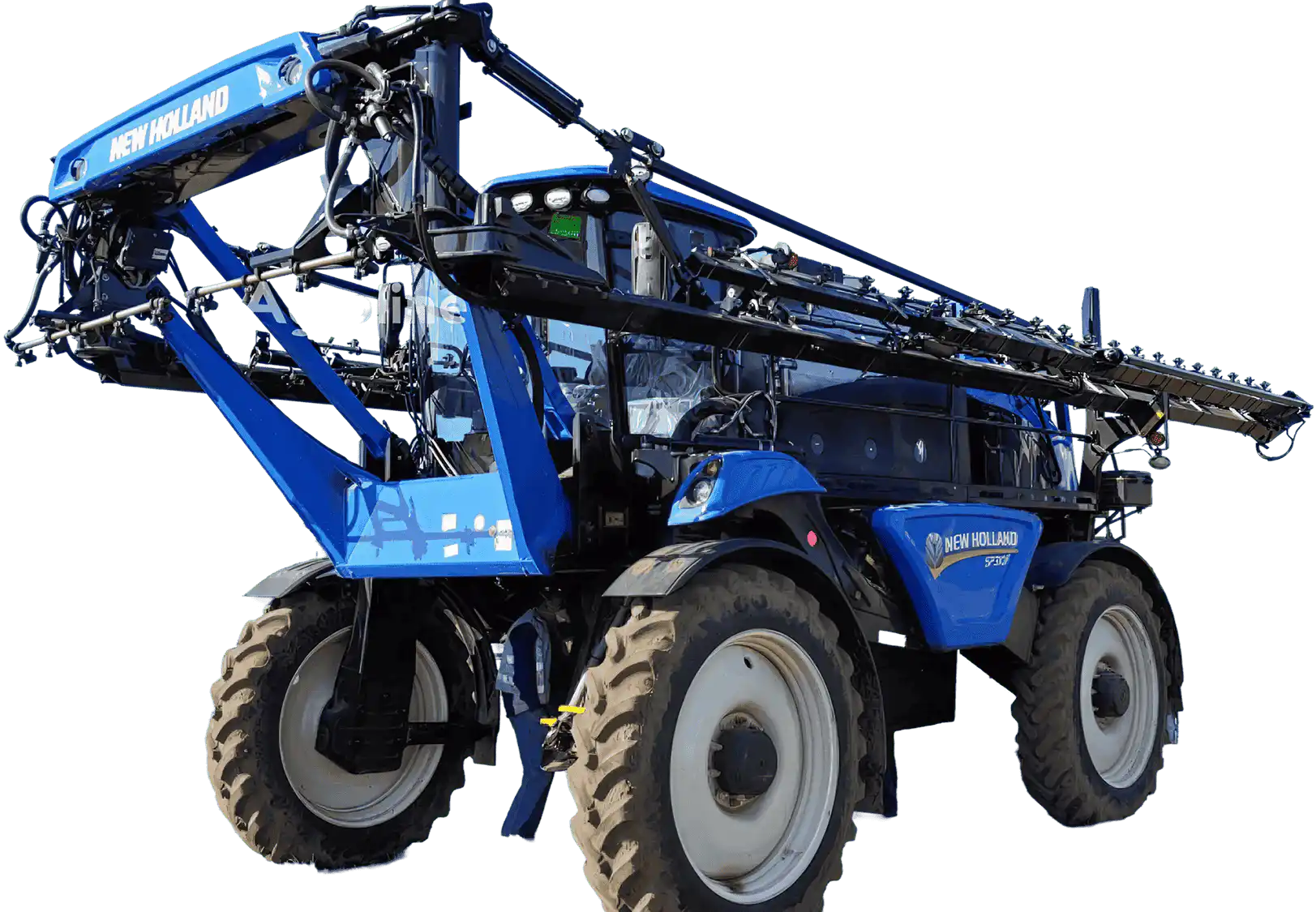
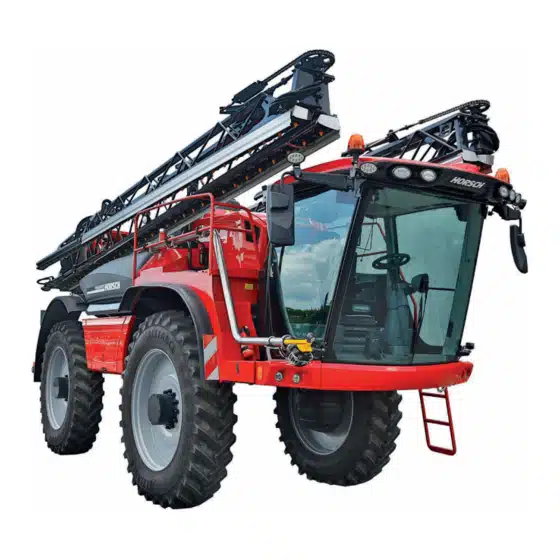
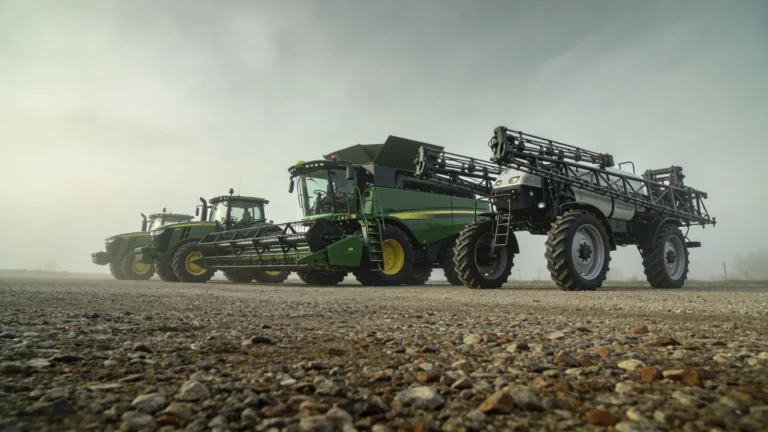
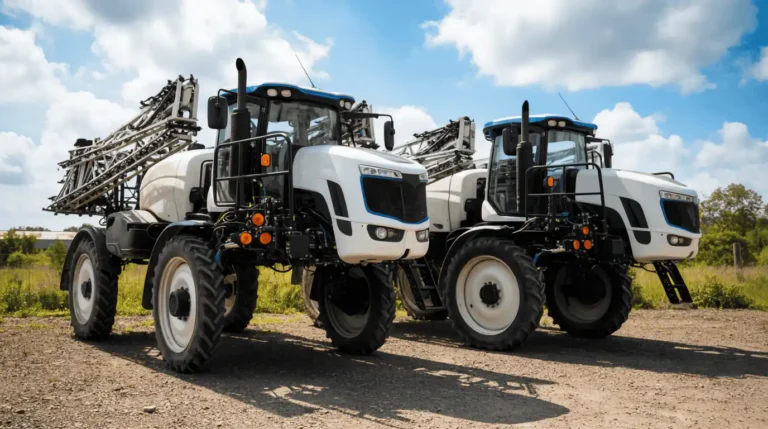
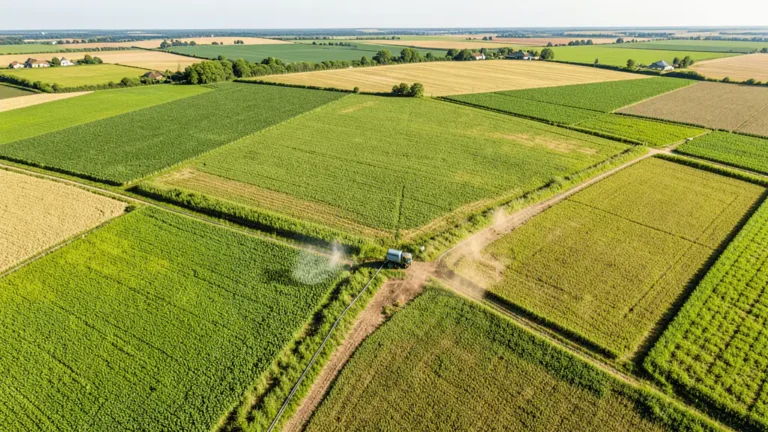
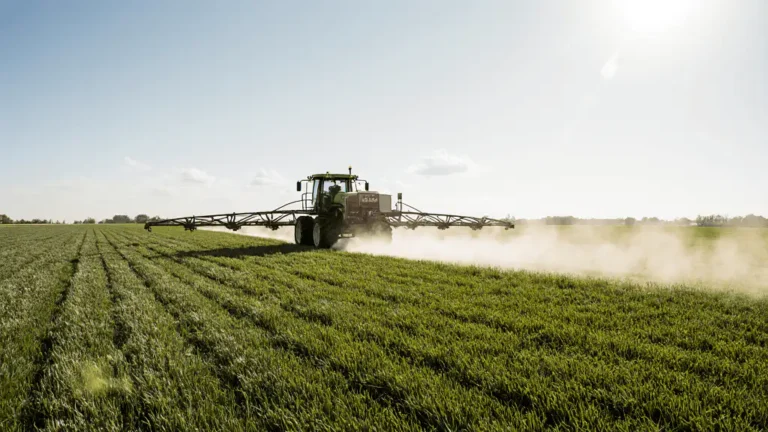
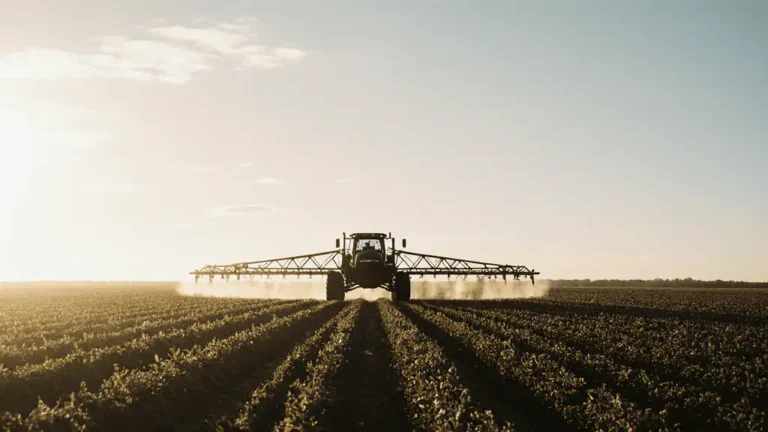
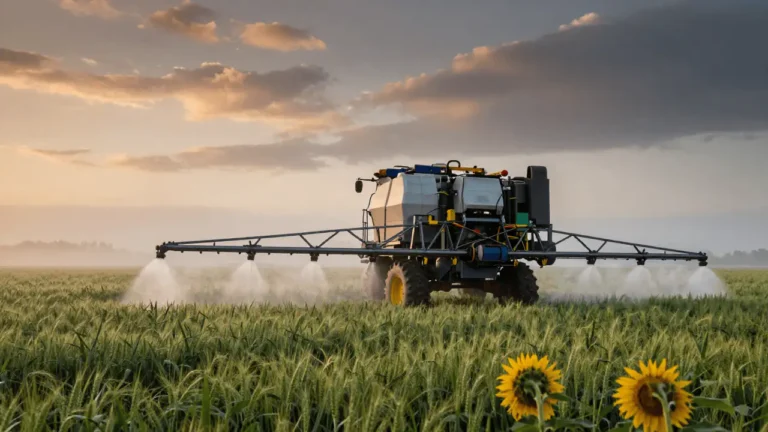
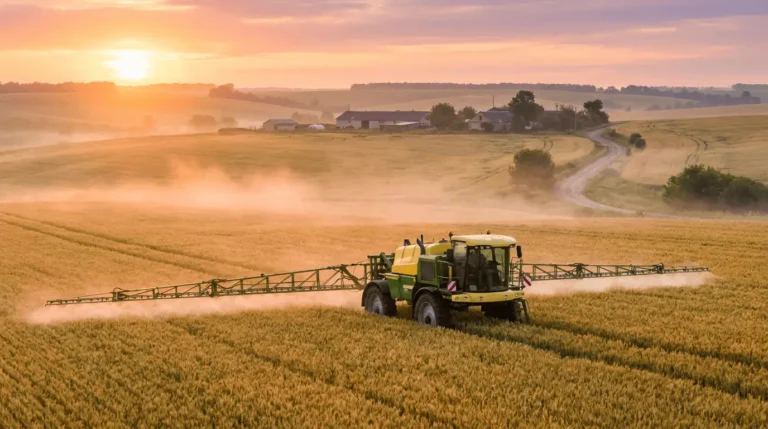
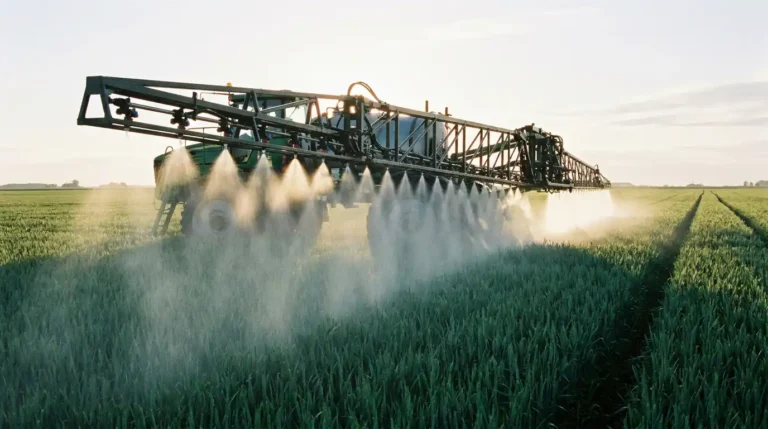
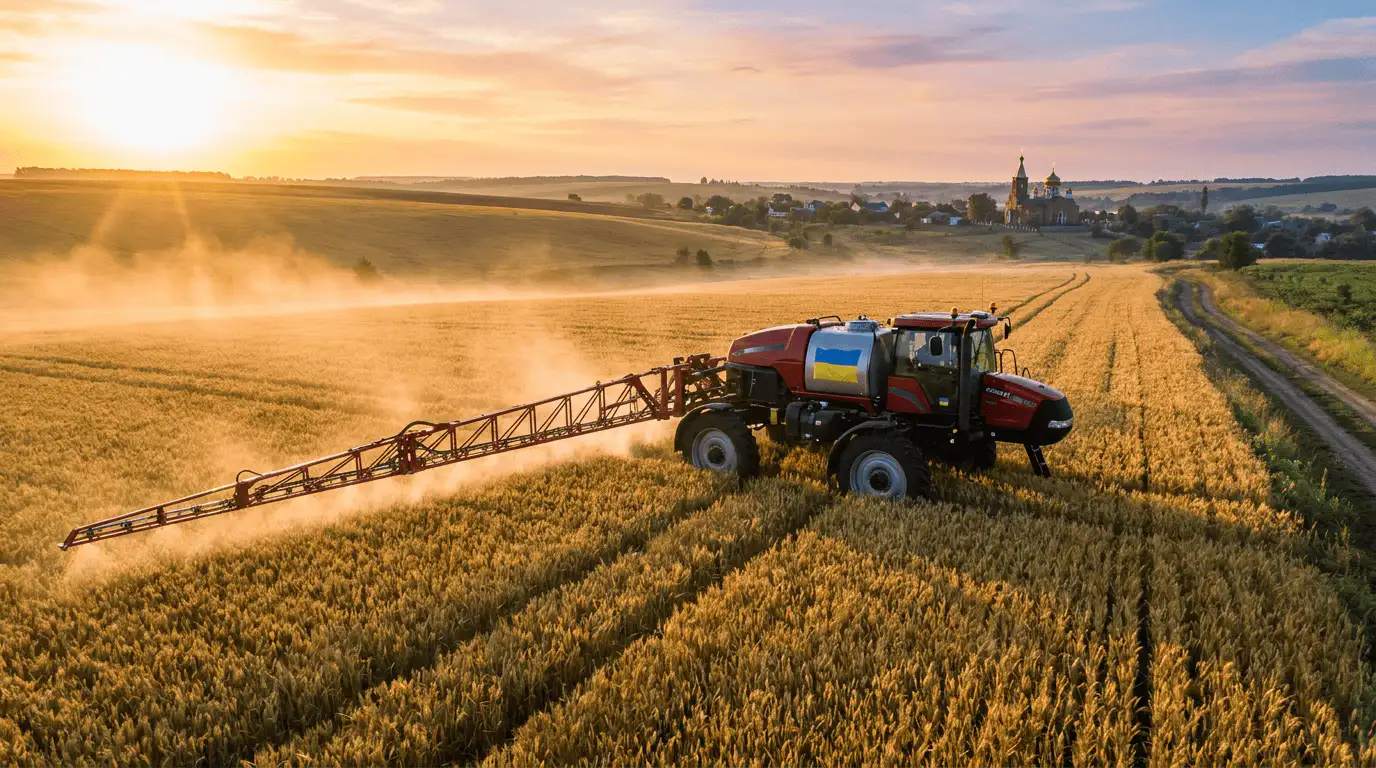
Self-propelled sprayers with a 24–28 m boom and a volume of 150–200 L/ha are best suited to fungicide treatments on wheat. They depend less on ground conditions and give a more even distribution than trailed machines.
If your own sprayer is busy or you don’t have one, we’ll come out to the field. Wester provides wheat spraying services with self-propelled sprayers in the Khmelnytskyi, Vinnytsia, Ternopil and Rivne regions. Areas from 400 ha. Timing — within the agronomic window, not “when the machinery is free”.
Checklist: what to check before treatment
Growth stage and weather:
- Wheat at the right stage (BBCH 31–33 or 37–51)
- Temperature from +10°C to +25°C
- No rain for the next 4–6 hours
- Wind speed up to 4 m/s
Solution:
- Water pH measured (optimally 5.0–6.5)
- Adjuvant or pH regulator added for alkaline water
- Water volume 150–200 L/ha
- Compatibility of tank-mix components checked
Machinery:
- Nozzles checked or replaced
- Travel speed matches the application rate
- Boom height above ground suited to the crop and conditions
Frequently asked questions
How many times a season does wheat need a fungicide treatment?
For most conditions in Ukraine two treatments are enough: the first at stem elongation (BBCH 31–33), the second at flag leaf or start of heading (BBCH 37–55). In years with high disease pressure or early infection some farms do three treatments. One treatment is the minimum insurance, but often not enough.
Can a fungicide be combined with an insecticide in one tank?
It can, but not always. Before mixing, check the compatibility of the specific products — or do a trial mix in a small container. Some combinations form a precipitate or reduce the efficacy of one of the products.
Should an adjuvant be added to a fungicide on wheat?
Yes, especially if you use hard water or water with a pH above 7.0. Organosilicone adjuvants improve droplet spread over the leaf surface and increase fungicide penetration. This is especially noticeable when treating in difficult conditions — in heat or when the leaves have a heavy waxy coating.
When is it better to go out: morning or evening?
Both windows work. The main thing is to avoid midday heat above +25°C and not to go out when there’s dew. Early morning (7:00 to 10:00) or evening (18:00 to 21:00) are optimal: lower temperature, less wind, leaves without dew.
Summary
Fungicide treatment of wheat isn’t “go out into the field and spray”. It’s several interconnected decisions: the right stage, a quality solution, sound machinery and suitable weather. Miss even one point, and the treatment’s efficacy drops many times over.
If you don’t want to think about machinery, we’ll take it on. Leave a request, and we’ll come out in the right agronomic window.
We’ll call you back within 2 hours and agree the visit.