The plough is one of the main implements without which modern agribusiness is hard to imagine. It provides effective preparation of the soil for sowing and improves soil structure and fertility. But how do you choose a plough that best meets the needs of your particular business?
Types of ploughs and their features
The three most common types of ploughs are:
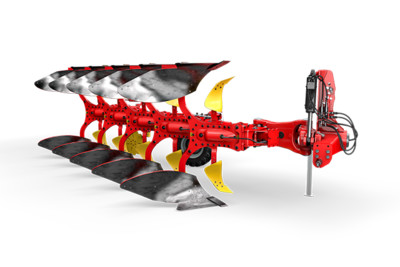
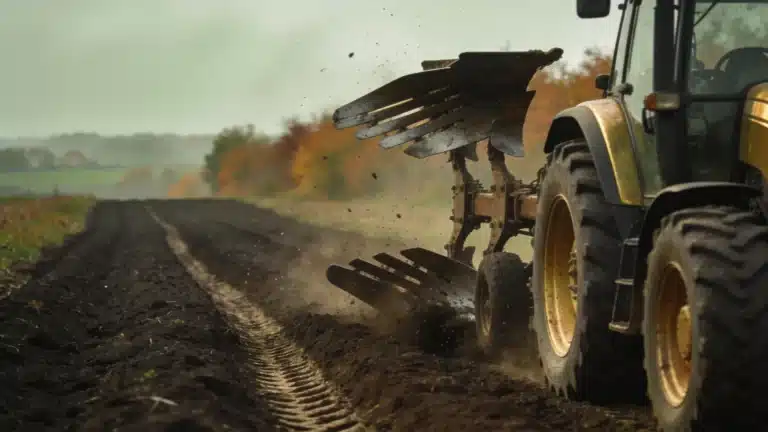
Reversible plough
The most popular choice among farmers thanks to its versatility. It lets you work without extra passes, which reduces fuel costs and saves time.
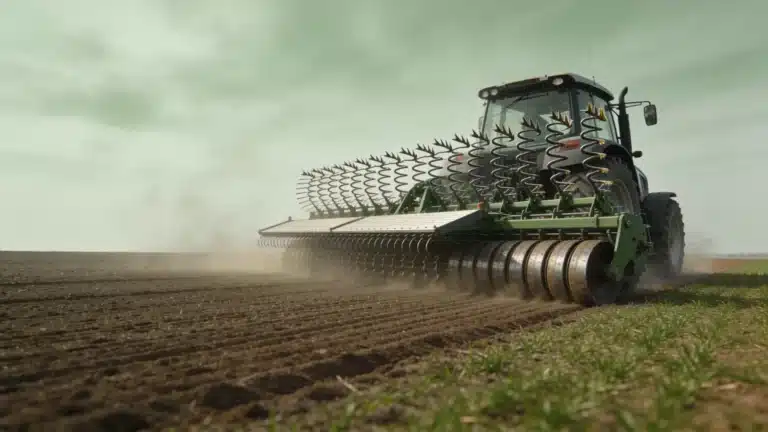
Chisel plough
Provides deep loosening of the soil without turning it over. The ideal choice for fields where it’s important to keep moisture and avoid erosion.
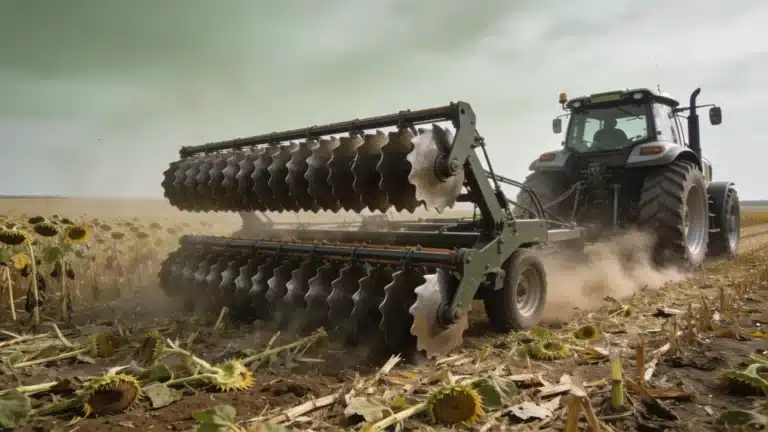
Disc plough
Effective on heavy, dense and dry soils; copes well with plant residues and weeds.
What characteristics should you look at when choosing a plough?
When choosing a plough for your farm, consider the following factors:
Soil type
Disc or chisel ploughs are better suited to heavy soils, while reversible ploughs suit medium and light soils.
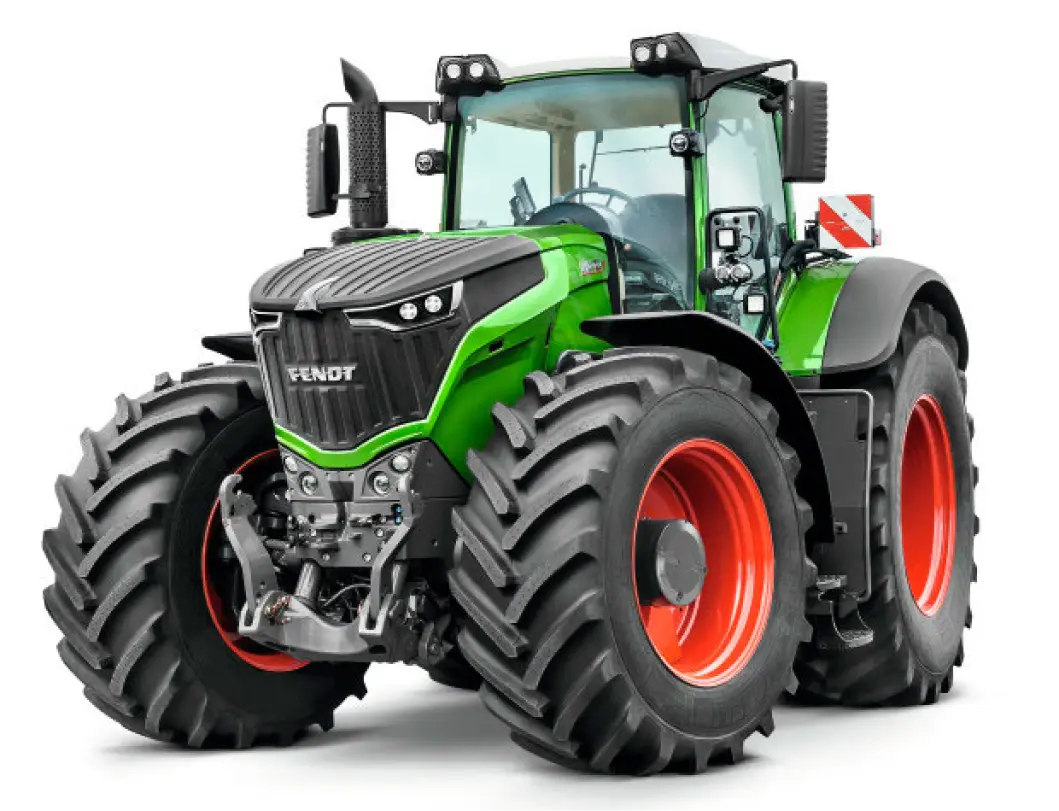
Tractor power
It’s important to match the plough to the power of your tractor to ensure efficient work and avoid overloading.
Working width
The wider the working width, the faster you can work the field. But it also affects the tractor power required.
Equipment quality and reliability
A plough is an investment for many years, so it’s important to choose implements from proven manufacturers made of high-quality materials. A reliable plough should have a sturdy design, quality working parts and easy replacement of wear parts.
It’s just as important that the company selling or renting out the machinery can offer you quality servicing and advice.
Rent or buy a plough?
If you plan to use a plough seasonally or your business has a limited budget, renting a plough is a great option. It lets you optimise costs, test the equipment in real working conditions and avoid the costs of maintenance and storage.
So choosing the right plough will help you significantly cut tillage costs, raise yields and make your farm more efficient.
How a reversible plough is built
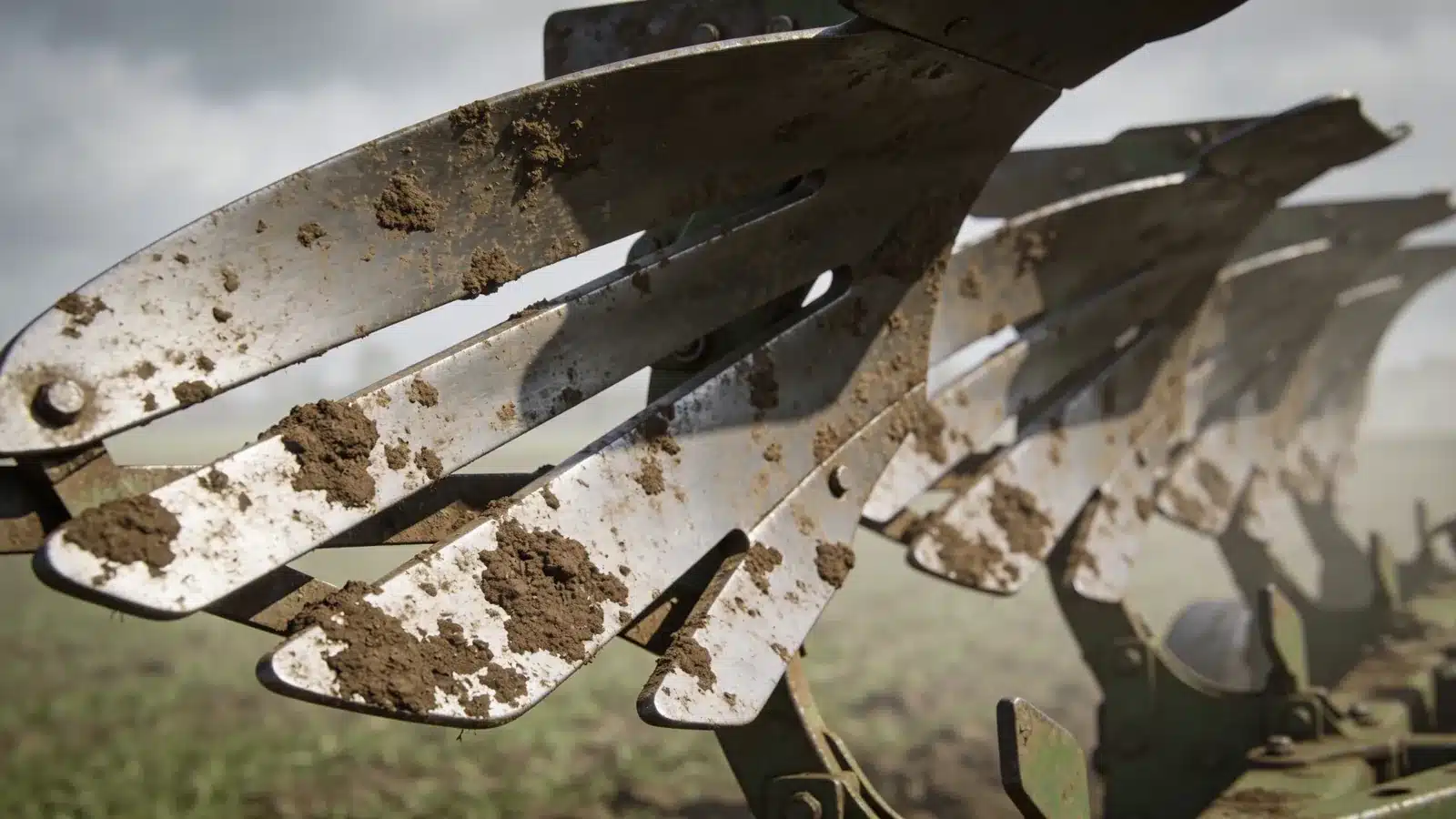
To choose and set up a plough correctly, it’s worth understanding what each of its parts does. The quality of ploughing and fuel consumption depend directly on the condition of these elements.
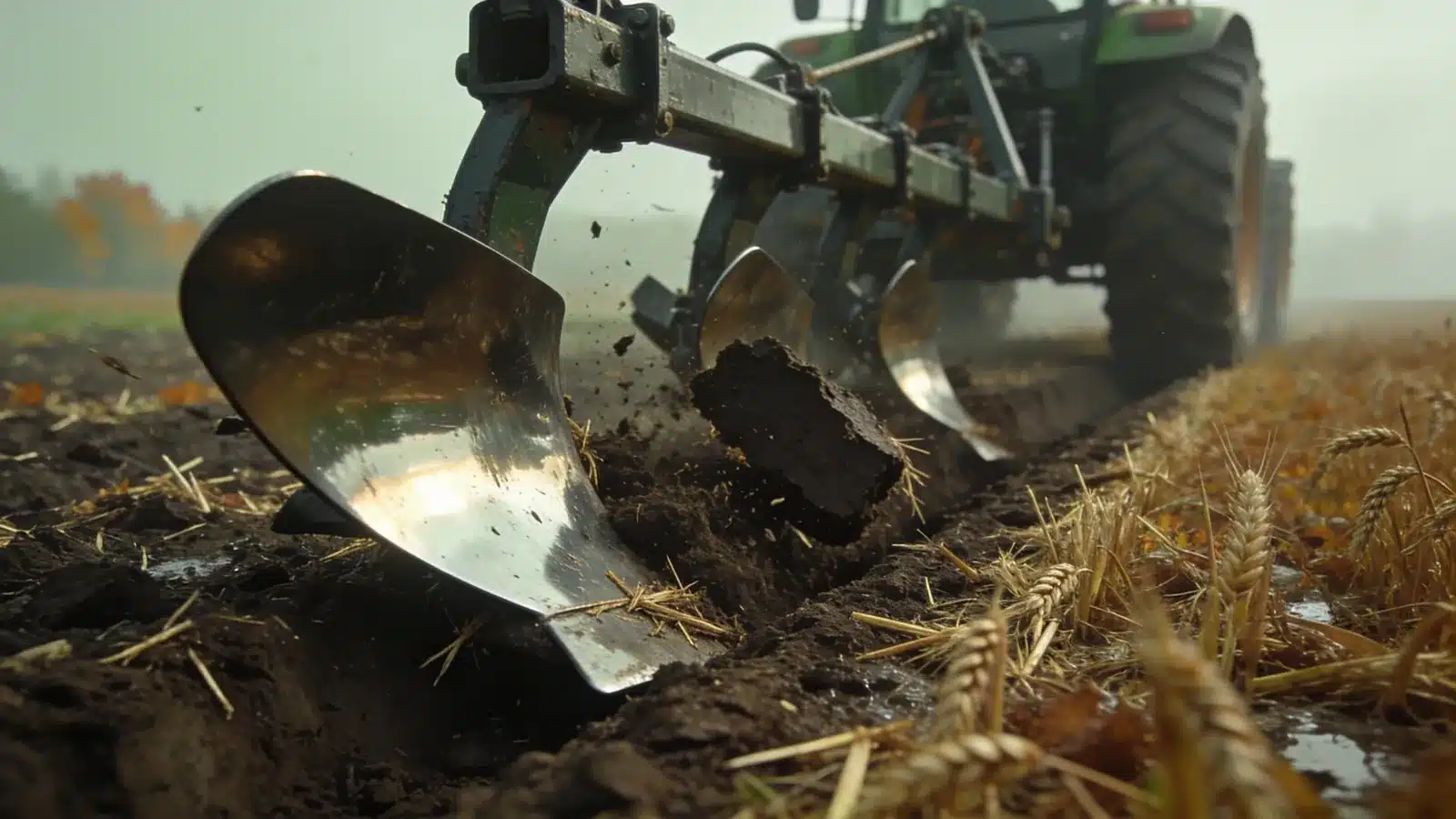
Cuts the soil slice from below. A blunt share “pushes” the plough out of the furrow and increases draught.
Lifts, crumbles and turns the slice. How well residues are buried depends on its shape.
Keeps the body from sliding sideways and stabilises the plough’s working depth.
Cuts the top layer with residues and drops it into the bottom of the furrow so that stubble doesn’t stick out of the ploughed land.
Turns the frame 180° at the end of each run — the plough throws soil in one direction without dead furrows or back furrows.
How the body turns the slice
- Share cuts the slice from below at the set depth
- Mouldboard lifts the slice and crumbles it
- The slice turns over and lies on the previous one
- Stubble and residues end up at the bottom, under a layer of soil
- Open furrow — the next slice will lie in it
- “Plough pan” — compaction at the ploughing boundary if you plough to the same depth every year
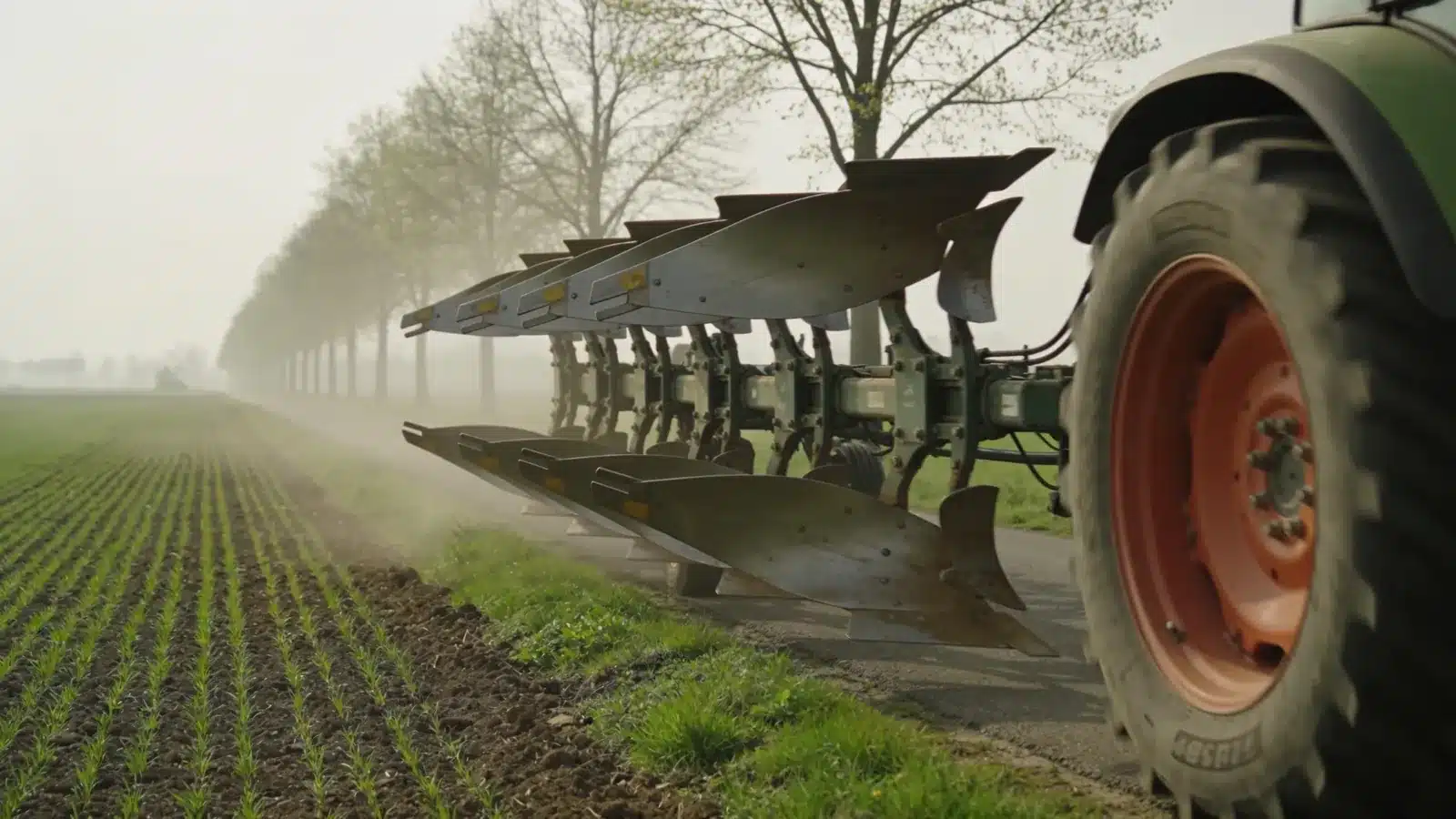
Mounted, semi-mounted or trailed
Besides the type of bodies, ploughs differ in how they are hitched to the tractor. This determines the number of bodies and how heavy a tractor is needed.
Mounted
Carried entirely on the tractor’s three-point hitch. Manoeuvrable and convenient on small fields, but limited by the weight the hitch can carry.
Semi-mounted
The front part is on the hitch, the rear rests on its own wheel. Allows more bodies without overloading the tractor.
Trailed
Has its own running gear and is attached to the drawbar. For large fields and powerful tractors.
How to match a plough to a tractor
The most common mistake is buying a plough “to grow into”. An overloaded tractor slips, doesn’t hold depth and burns fuel, while an underloaded plough means extra runs and hours. A rough rule: one body 40–45 cm wide needs about 35–50 hp, depending on the soil and ploughing depth.
| Bodies | Width | Tractor power | For which areas |
|---|---|---|---|
| 3–4 | 1.2–1.8 m | ~120–200 hp | Family farms, small fields |
| 5–6 | 2.0–2.7 m | ~180–300 hp | Medium-sized farms, fields from 50 ha |
| 7–9 | 2.8–4.0 m | ~280–450 hp | Large fields, service companies |
An approximate calculation: 35–50 hp per body depending on the soil, a time utilisation factor of 0.8. Real output depends on field shape, moisture and turns.
How deep to plough
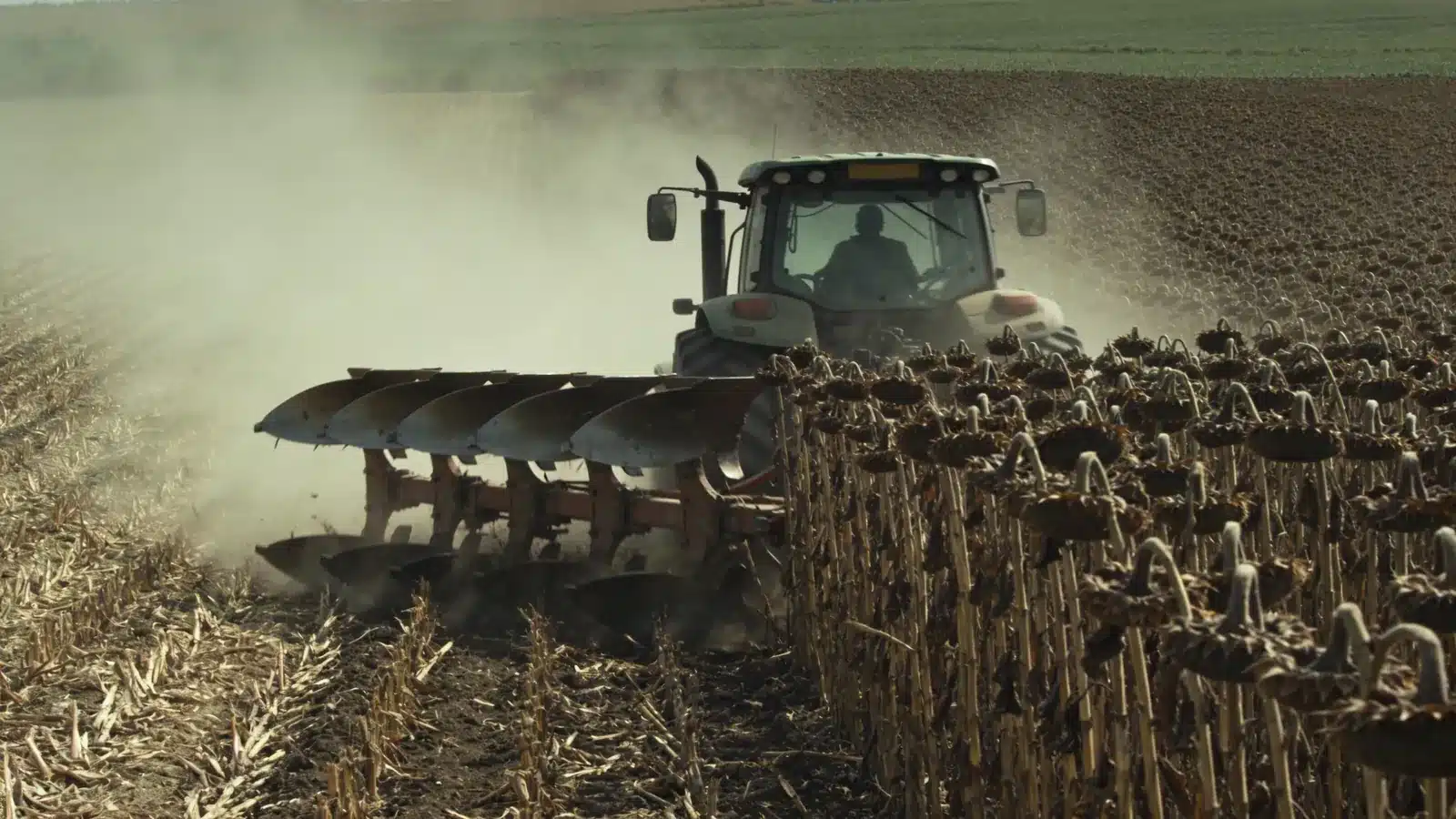
Ploughing depth isn’t “the deeper the better”. It depends on the crop you’ll sow and how deep you ploughed last time.
Barley, wheat, oats — the roots are shallow, and deep ploughing will only dry out the field.
If ploughing after non-fallow predecessors — shallow and early, so the soil has time to settle before sowing.
Maize, sunflower, sugar beet — deep autumn ploughing so the roots go deep and the soil accumulates moisture over winter.
How to check ploughing quality
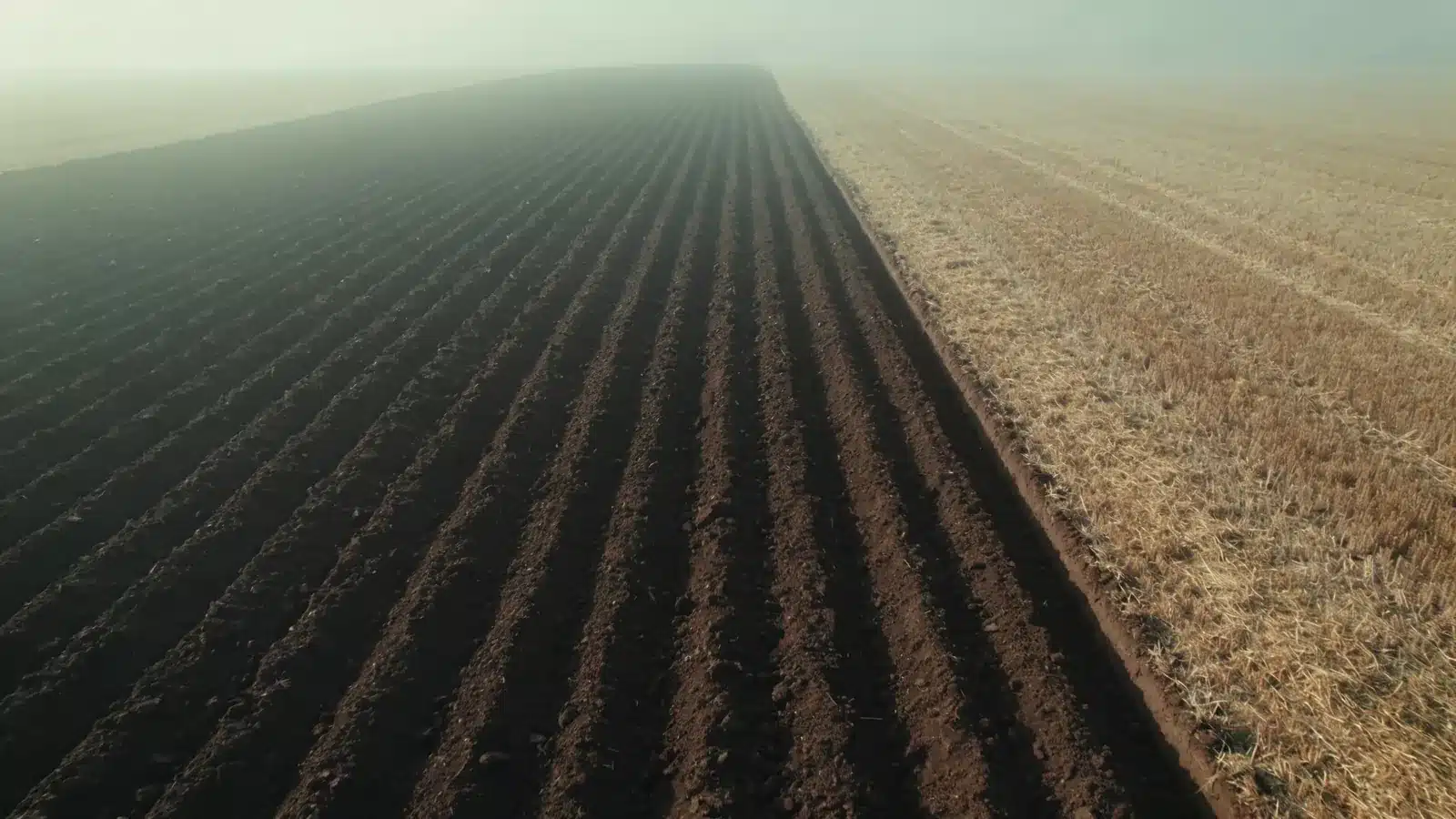
- slices are even and of the same width
- residues and weeds are fully buried
- the depth is the same across the whole field
- no misses, ridges or unploughed wedges
- headlands are ploughed, field edges are worked
- stubble sticks out between the slices
- large clods — waterlogged soil was ploughed
- the depth “wanders” — the plough is skewed
- ridges and furrows where passes meet
- unploughed strips on headlands
Typical mistakes when ploughing
Ploughing waterlogged soil
The slices smear and leave clods that then have to be broken up with several passes. Plus compaction from the tractor wheels.
A frame that isn’t set up
If the frame is skewed, the first and last bodies plough at different depths. Set it up before every field, not once a season.
Worn shares
A blunt share penetrates poorly and sharply increases fuel consumption. Wear parts should be checked every day during the season.
Too high a speed
At high speed the slice is thrown rather than turned, and residues stay on the surface. Every plough has its own optimal speed range.
- light soils prone to wind erosion
- a dry region where moisture needs to be conserved
- little residue and no perennial weeds
- there’s already a compacted layer under the ploughing depth
In such cases look at a chisel, disking or deep loosening. A comparison of all the options is in the article “Soil tillage machinery: types of implements and how to choose”.
Questions and answers
Which plough is better — reversible or conventional?
For most farms — reversible. It throws soil in one direction without dead furrows or back furrows, doesn’t require marking the field into lands and leaves a more even surface. A conventional plough is cheaper, but the field needs more levelling afterwards.
How many plough bodies do I need for my tractor?
Roughly 35–50 hp per body 40–45 cm wide. More precisely it depends on the soil and depth: on heavy soils take fewer bodies than the calculation allows.
How deep should you plough for maize and sunflower?
Autumn ploughing for row crops is usually 25–30 cm. For early spring cereals 20–22 cm is enough.
Can wet soil be ploughed?
It’s not advisable. Waterlogged soil smears, forms clods and gets compacted by the wheels. Better to wait until the soil crumbles in your hand rather than rolling into a rope.
What pays off better — buying a plough or ordering ploughing?
It depends on the area. A plough works a few weeks a year and stands idle the rest of the time. If the area is small or ploughing isn’t needed every year, it’s more cost-effective to order the service with machinery and an operator.
A Pöttinger S6.50 reversible plough with a tractor and operator. Fuel and transport included, from 400 ha.