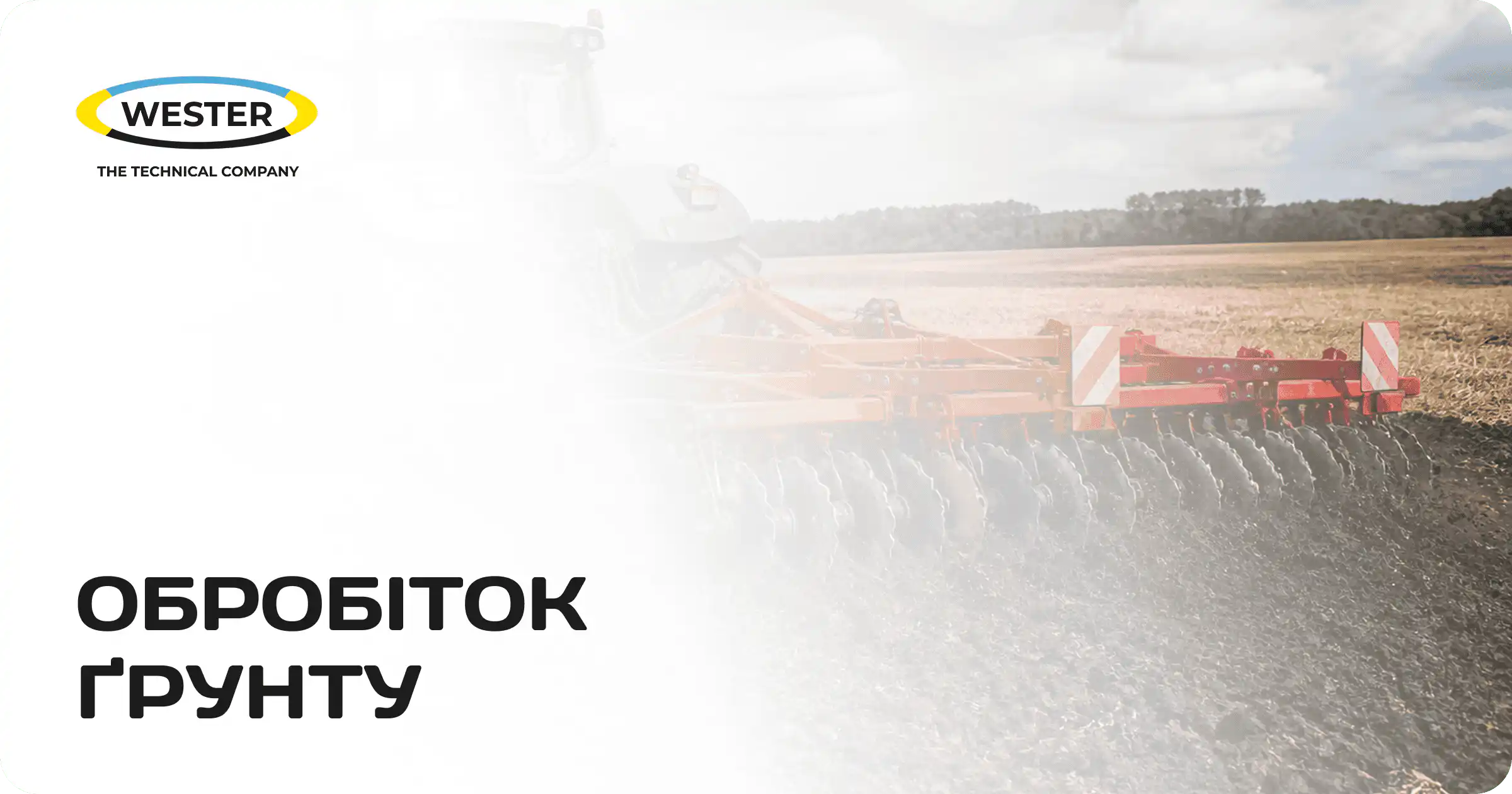
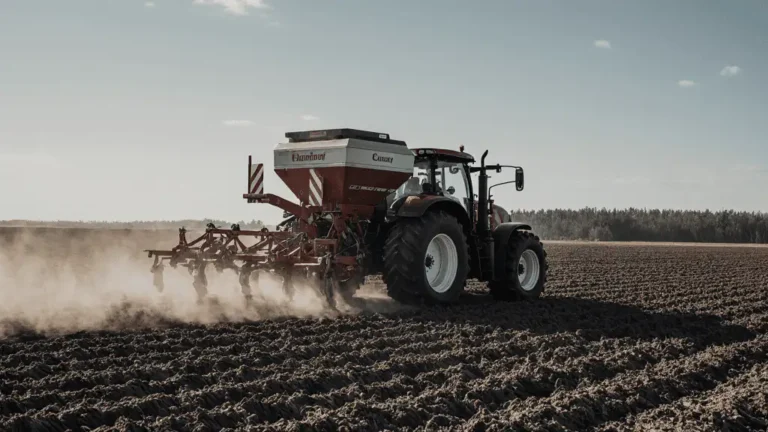
Four main groups of machinery are used for soil tillage. There is no universal implement: the choice depends on the previous crop, the condition of the soil and the task that needs solving right now.
- Cultivator4–8 cm
- Disc harrow8–15 cm
- Plough20–30 cm
- Deep loosener35–45 cm
Below — how these implements differ, when each is needed, how to build a tillage system for the season from them and what to look at if you are choosing machinery for your field or ordering the work from a contractor.
Primary, surface and deep tillage
Before choosing an implement, it’s worth understanding what task it solves. All soil operations fall into three levels:
Surface
Stubble cultivation, chopping residues, pre-sowing levelling. Disc harrows and cultivators.
Primary
Ploughing with slice inversion or non-inversion tillage. Sets the field structure for the season.
Deep
Breaking up the compacted layer, restoring drainage. Not every year, but when needed.
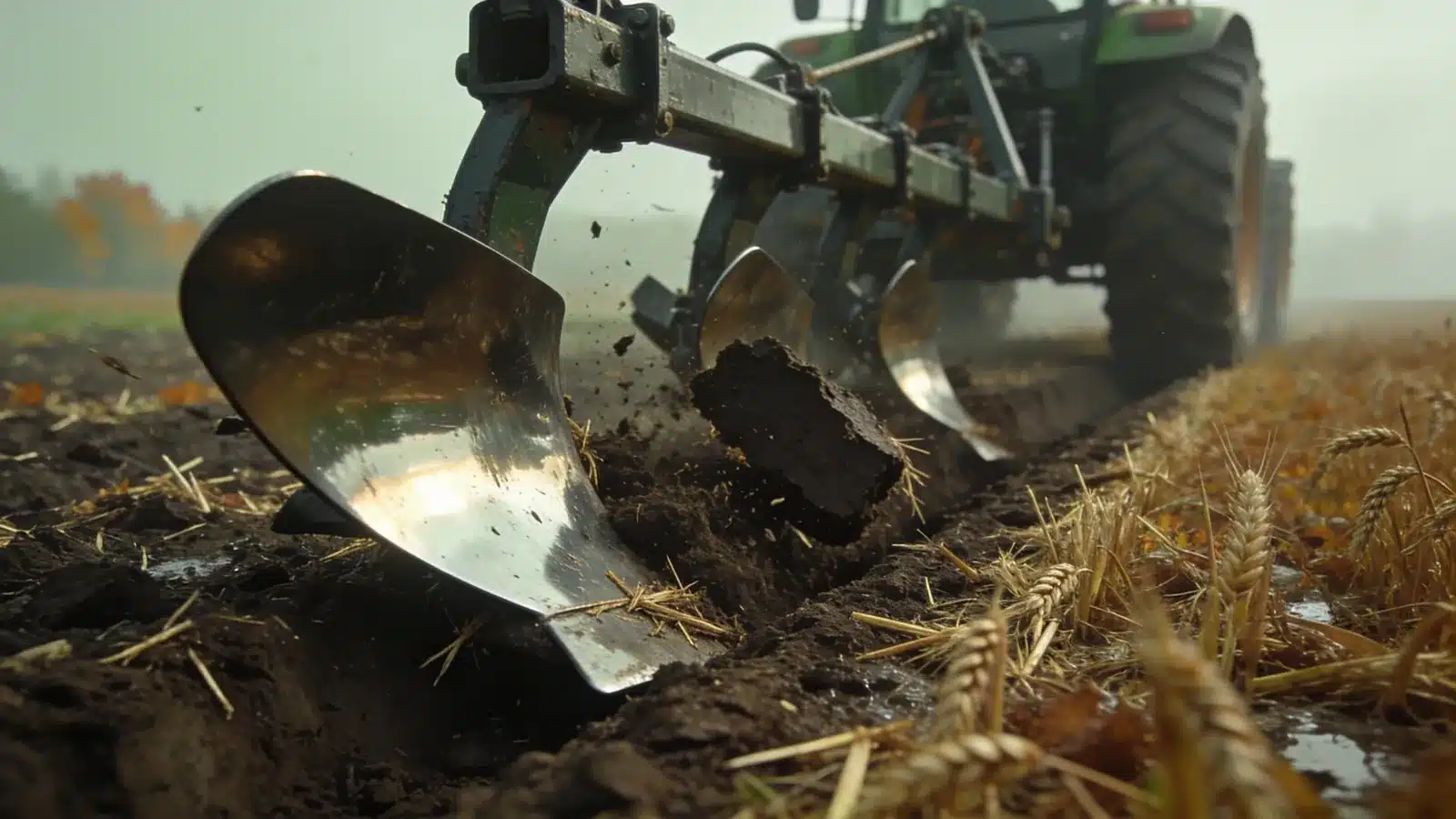 Depth20–30 cm
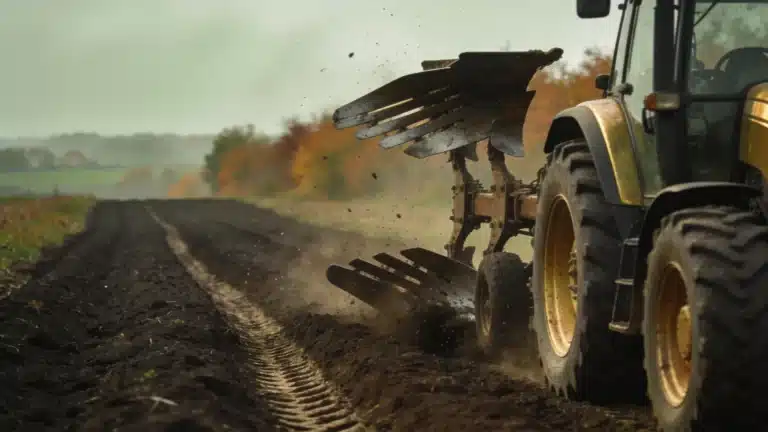
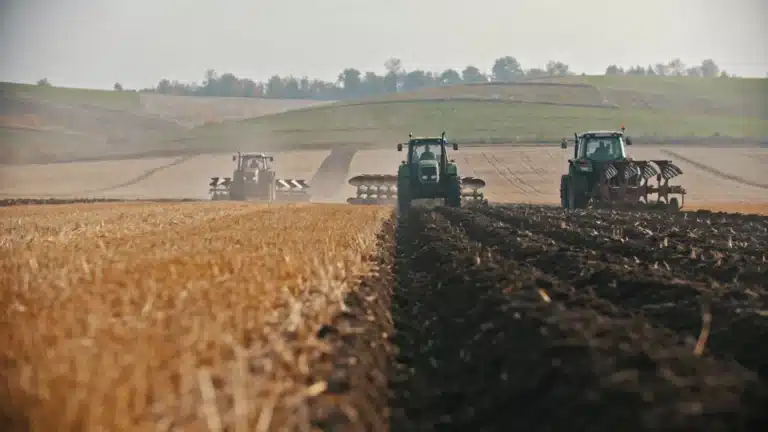
Plough: when ploughing is needed
A plough turns the top layer of soil and fully buries residues, weed seeds and some pathogens. For most farms today this means a reversible plough: it ploughs in one direction without dead furrows and doesn’t require the field to be marked out into lands.
- after crops with a large mass of residue
- in fields with perennial weeds
- when ploughing up grassland or neglected plots
- when organic fertilizers need to be incorporated
- the most energy-intensive operation
- dries out the top layer
- forms a plough pan over the years
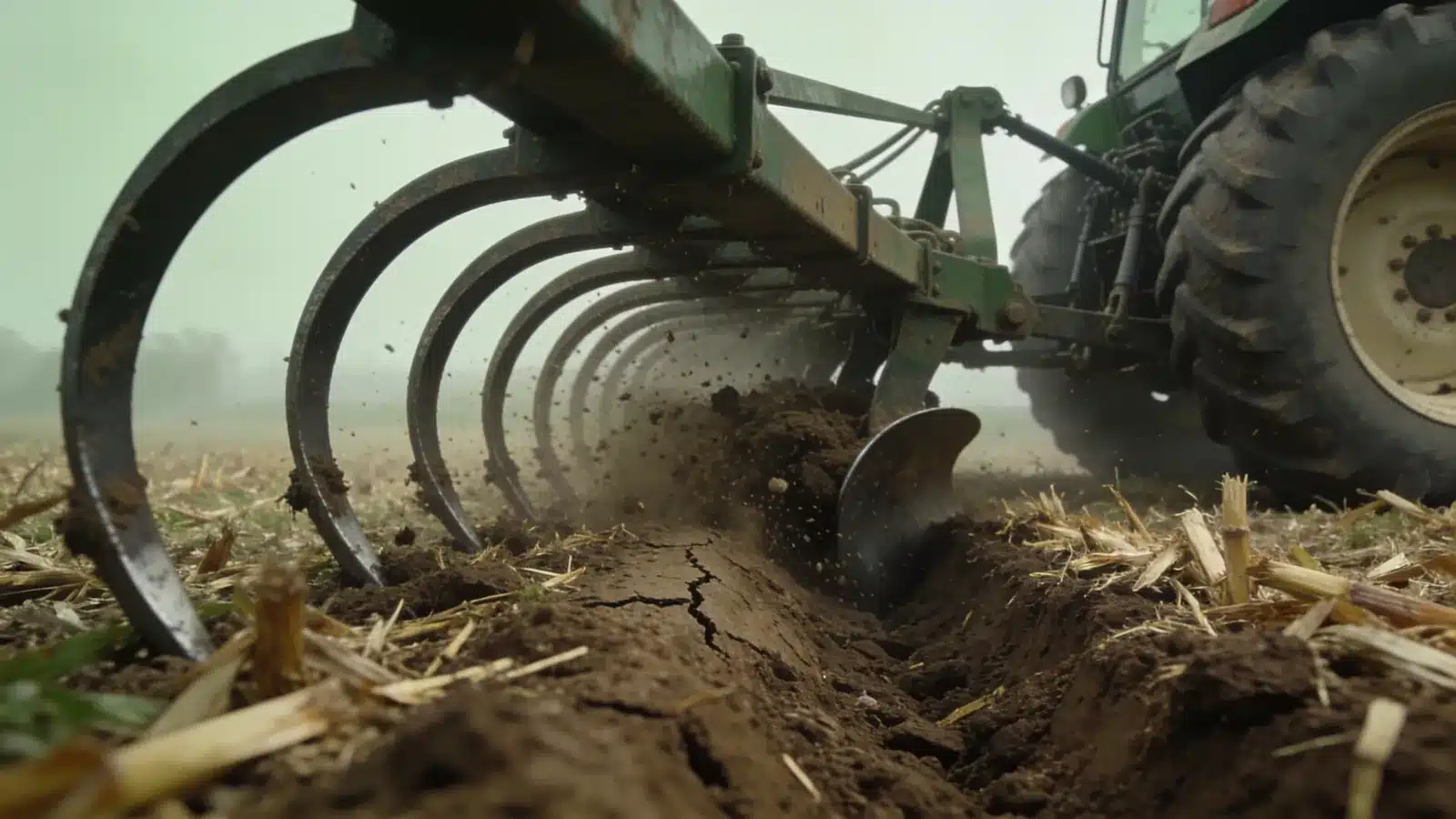 Depth35–45 cm
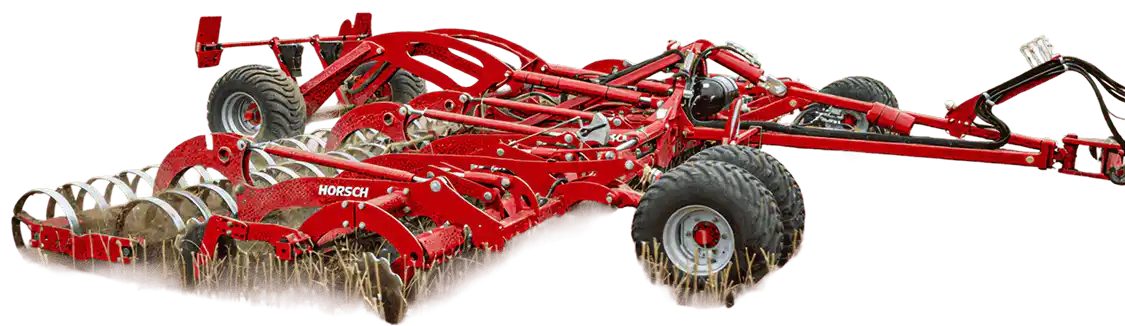
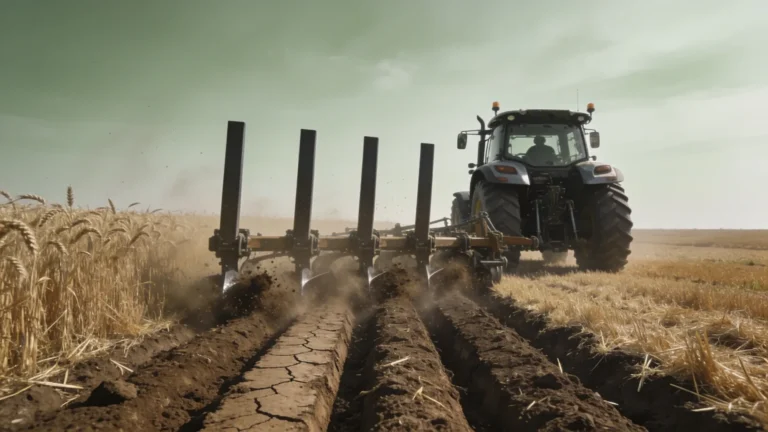
Deep loosener and chisel: working without turning the layer
A deep loosener cuts and loosens the soil with shanks at 35–45 cm without turning it over. Residues stay on the surface and protect the field from erosion and drying out. A chisel works shallower and often replaces ploughing in minimum-tillage systems.
- breaks up the compacted layer under the plough depth
- restores drainage and lets roots go deeper
- keeps moisture and residues on the surface
- needs a powerful tractor
- not every year — once every few years
- doesn’t work on a waterlogged field
- water stands in low spots for a long time after rain
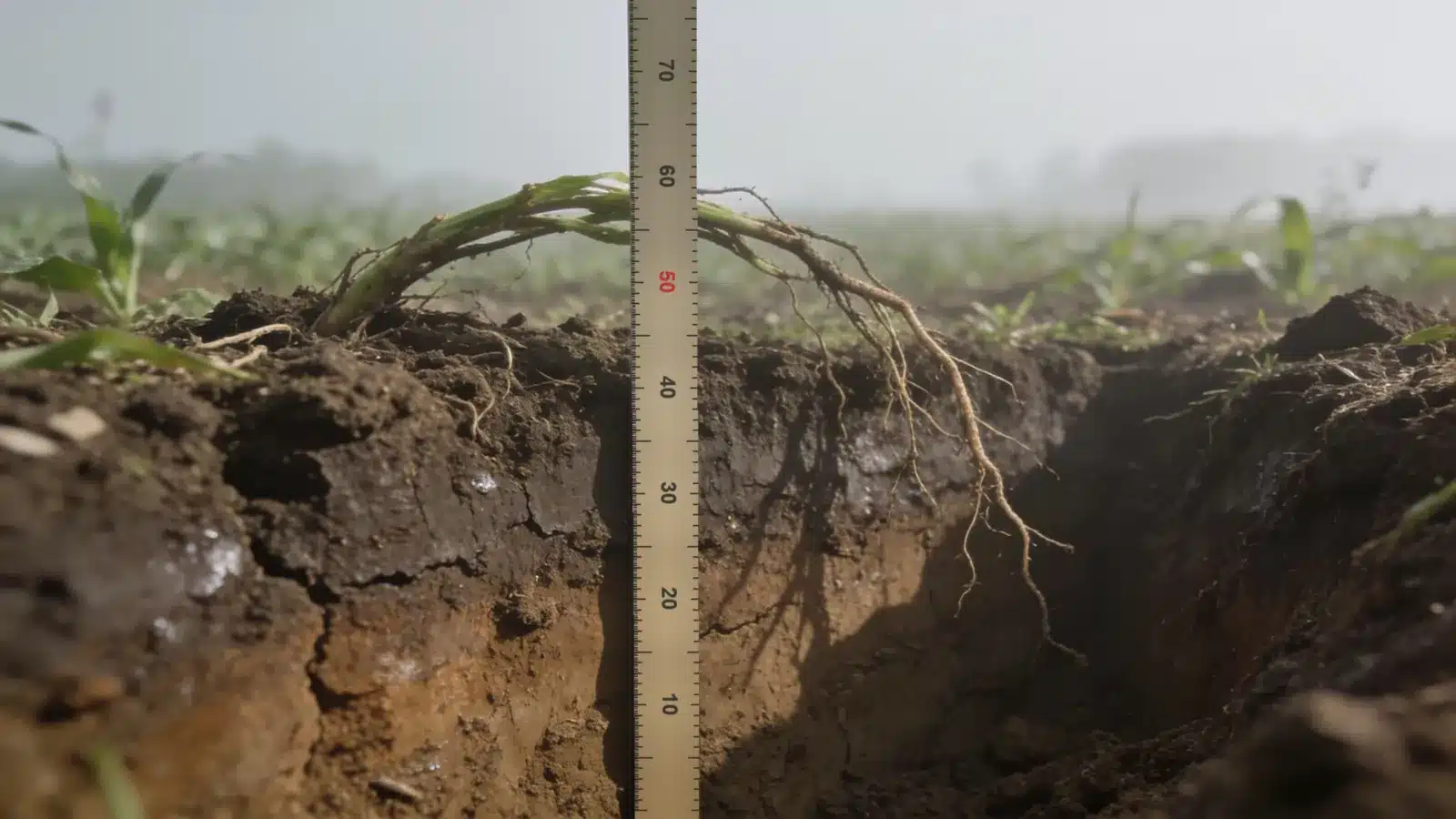
- roots turn sideways at a certain depth
- a spade or penetrometer “hits” a hard layer
- in a drought, crops “burn out” earlier than the neighbours’
The simplest check is to dig a 50 cm pit and look at the roots. If they grow sideways rather than down, there’s a dense layer beneath them.
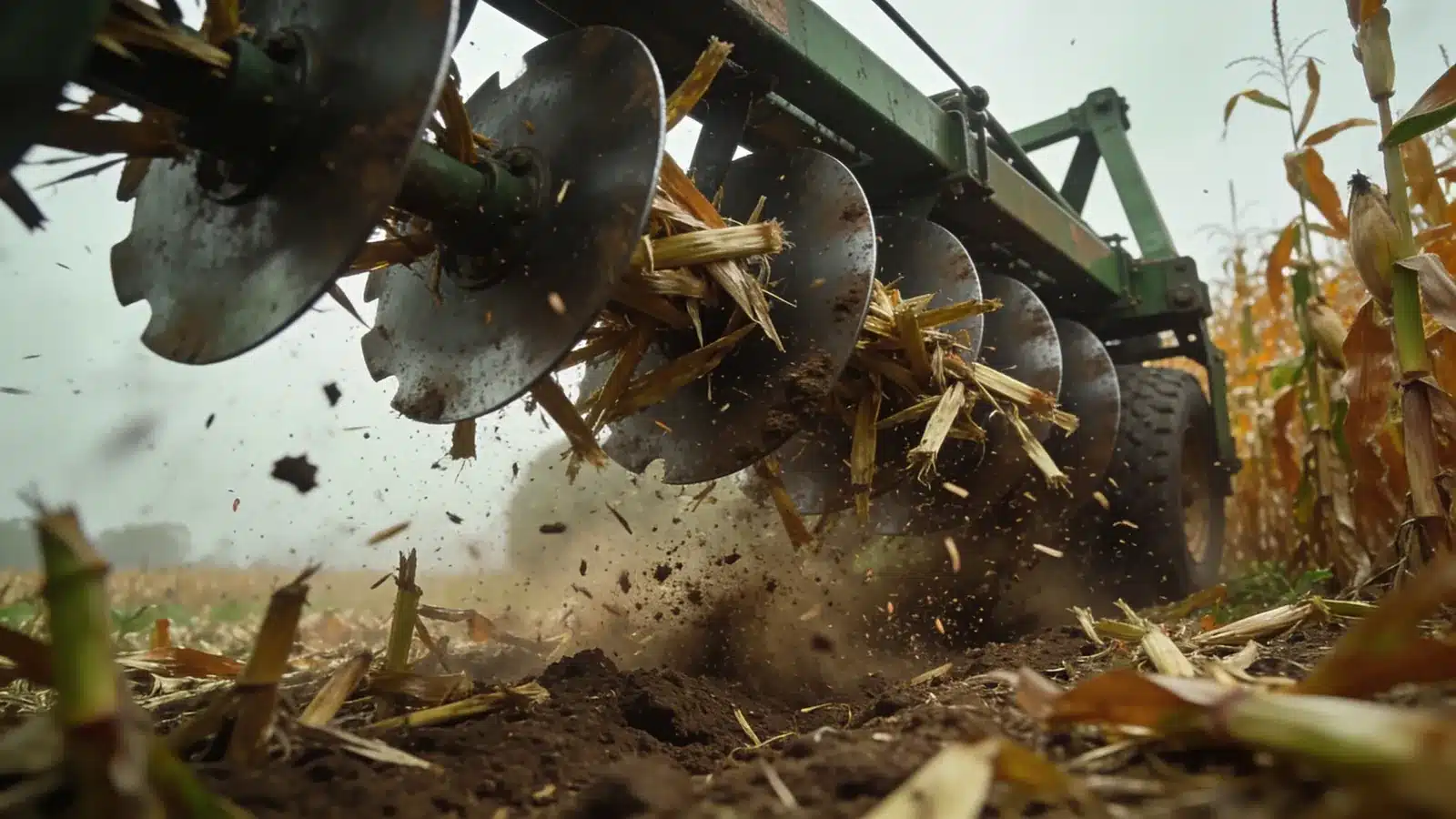 Depth8–15 cm
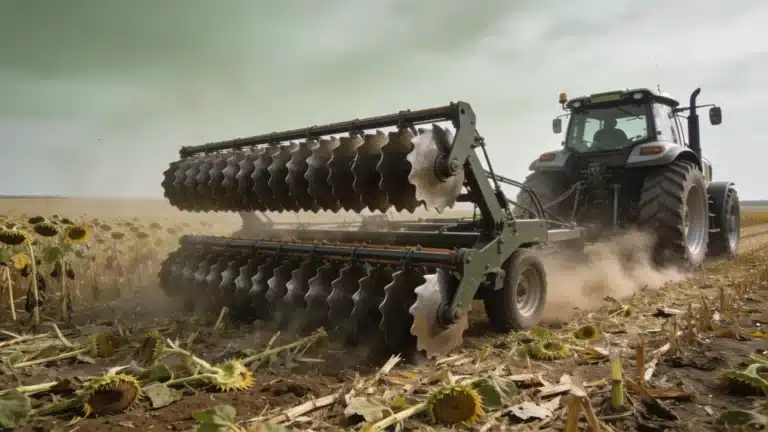
Disc harrow: stubble cultivation and chopping residues
A disc harrow cuts and mixes residues into the top layer of soil. It is the first operation after harvest: it triggers germination of volunteers and weeds, seals in moisture and prepares the field for primary tillage.
- right after harvest — stubble cultivation
- after maize and sunflower
- in minimum-tillage systems instead of ploughing
- a light harrow “bounces” over stalks
- doesn’t bury residues deeply
- clogs on wet soil
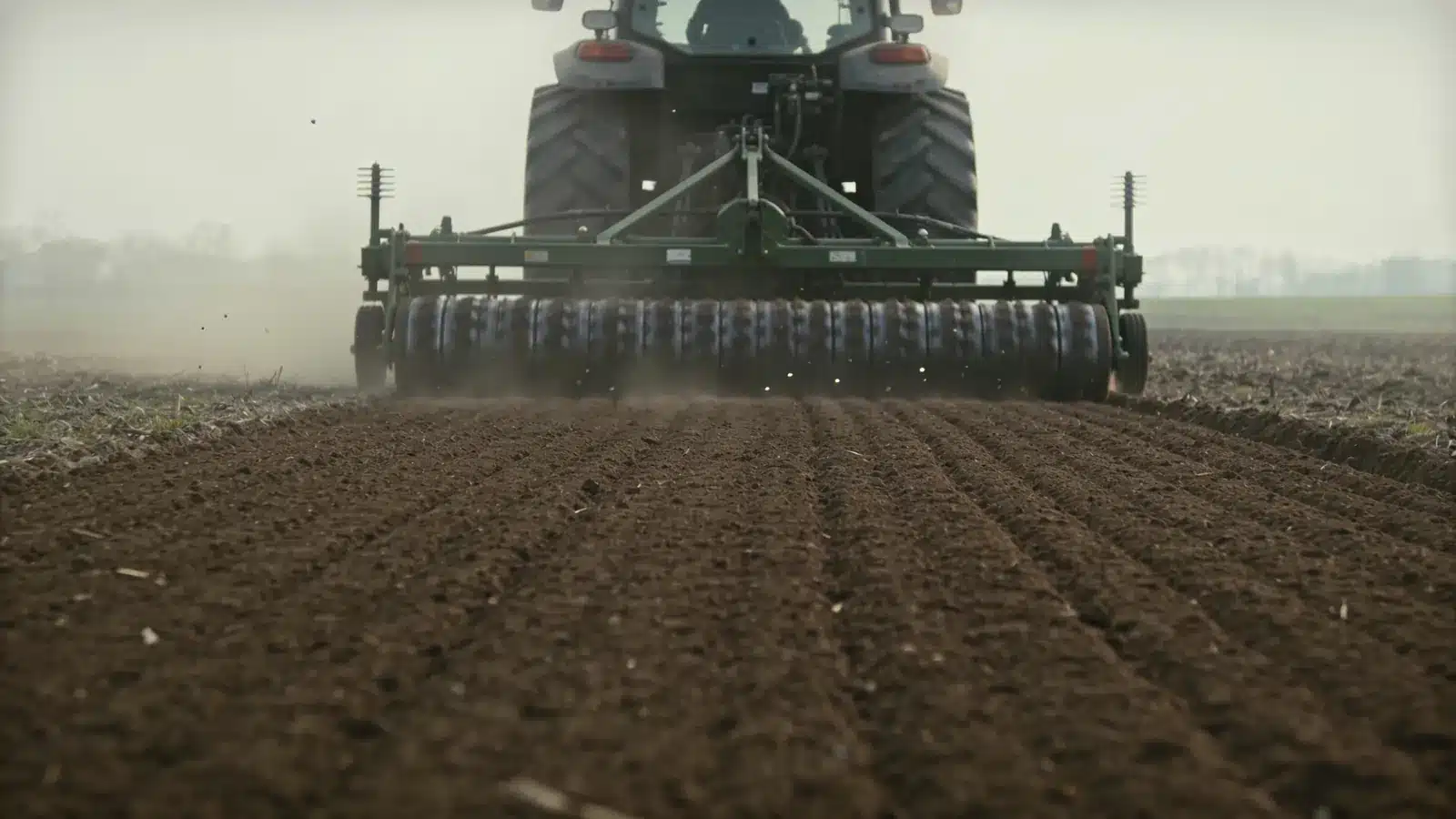 Depth4–8 cm
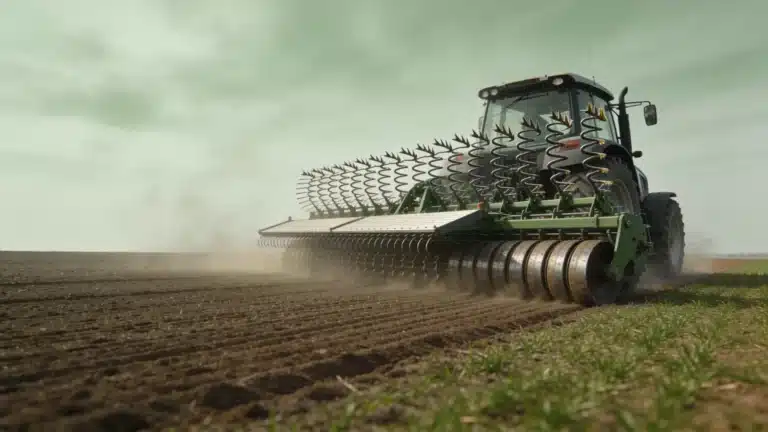
Cultivator: seedbed preparation
The cultivator is the last implement before the seed drill. Its job is to loosen the top layer, cut weed seedlings, level the field and leave a firm seedbed at seeding depth. How even the emergence will be depends directly on this.
- levels the field ahead of the seed drill
- cuts weed seedlings
- forms the seedbed for the seed
- cultivating deeper than needed
- every extra centimetre means less moisture
- working on waterlogged soil
Comparison of soil tillage machinery
| Implement | Depth | What it does | When it’s used |
|---|---|---|---|
| Disc harrow | 8–15 cm | Chops and mixes residues | Right after harvest, stubble cultivation |
| Plough | 20–30 cm | Turns the layer, buries residues and weeds | Primary tillage in autumn |
| Chisel | up to 30–35 cm | Loosens without turning | Instead of ploughing in minimum-tillage systems |
| Deep loosener | 35–45 cm | Breaks up the compacted layer | Once every few years when needed |
| Cultivator | 4–8 cm | Levels and prepares the seedbed | In spring or before sowing winter crops |
How to build a tillage system for the season
In practice implements don’t work alone but in combination. The three most common schemes — from the most reliable to the most economical:
Which operation to choose: a quick check
Previous crop — maize or sunflower?
Water stands, roots turn sideways?
Lots of perennial weeds or organic matter to incorporate?
Light soil, little residue, conserving moisture matters?
Your own machinery or a contractor
A full tillage set means a plough, a deep loosener, a disc harrow, a cultivator and tractors of the right power. Each implement works in the field for only a few weeks a year.
- the area is large and the machinery is busy all season
- you have operators and a repair base
- the operation is needed every year and on a tight schedule
- the operation is needed once every few years
- you don’t want to tie up money in machinery
- you need extra machines to cover the peak of the season
A detailed calculation of the cost per hectare with your own machinery is in the article “Cost of tilling a hectare: your own machinery vs a contractor”.
Questions and answers
What machinery is needed for soil tillage?
The basic set is a disc harrow for stubble cultivation, a plough or chisel for primary tillage and a cultivator for seedbed preparation. A deep loosener isn’t needed every year, only when a compacted layer appears in the field.
How is a chisel different from a plough?
A plough turns the soil layer and buries residues. A chisel loosens the soil with shanks without turning it — residues stay on the surface, moisture is retained better and fuel costs are lower.
What’s better after maize — ploughing or disking?
The first pass after maize is usually a heavy disc harrow — it chops the stalks. Then ploughing or a chisel, depending on the tillage system and the next crop.
How often is deep loosening needed?
Not every year. It’s done when there are signs of compaction: water standing after rain, roots turning sideways, a hard layer at ploughing depth. Usually once every few years.
Can disking replace ploughing?
Partly. A heavy disc harrow in minimum-tillage systems can replace primary tillage, but it doesn’t bury residues and weed seeds as deeply as a plough. On weedy fields ploughing remains more reliable.
Ploughing, disking, deep loosening and cultivation — with our own machinery and operator, from 400 ha.