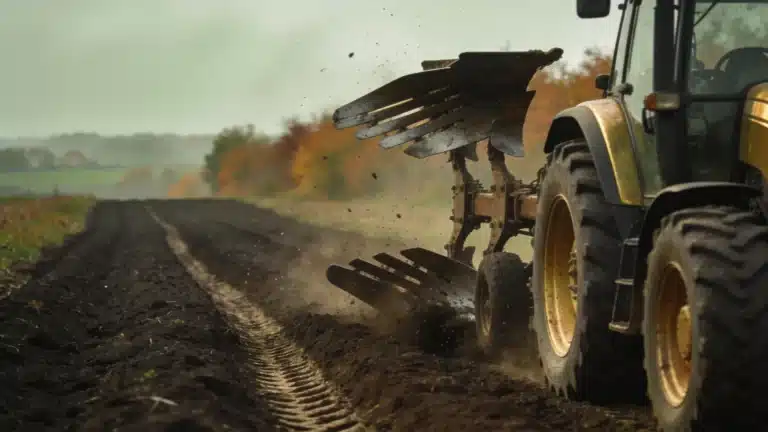
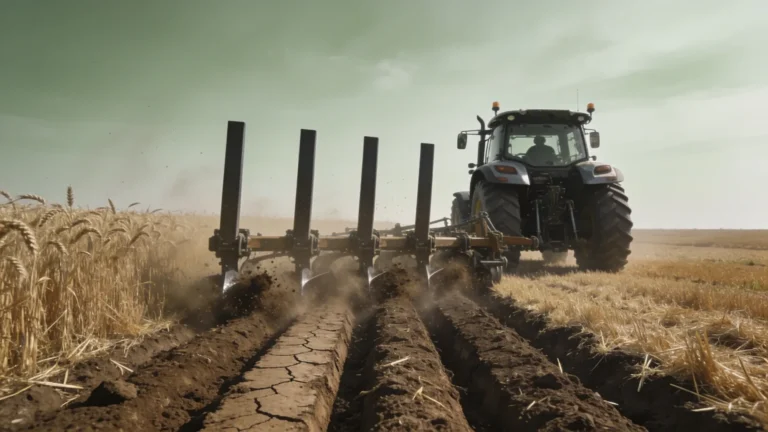
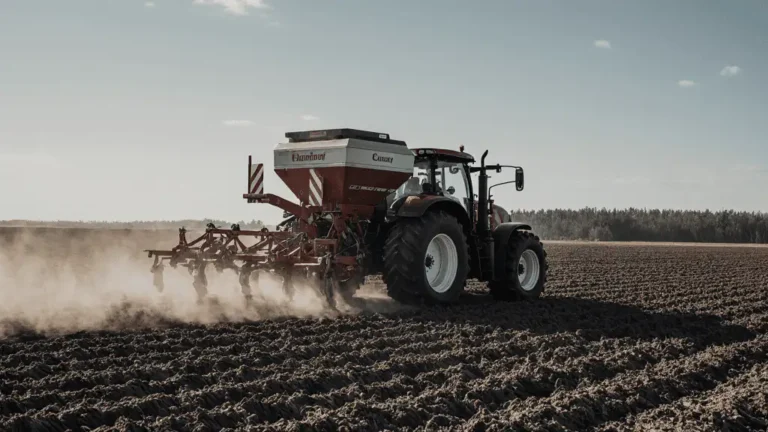
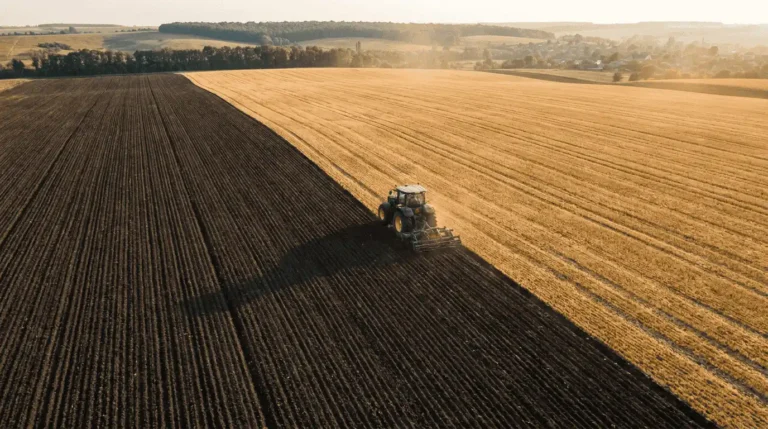
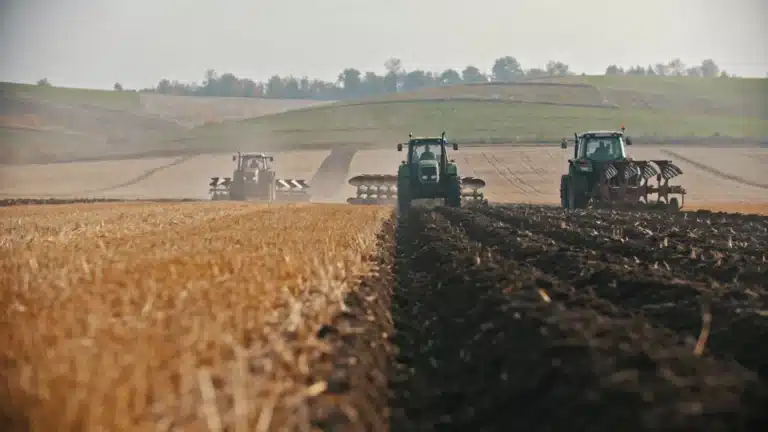
A deep loosener (subsoiler) is an essential implement for a modern farming business, helping to raise yields and maintain optimal soil properties. Thanks to deep tillage, these implements significantly improve soil structure, increase its air and water permeability, reduce compaction and promote the development of a strong root system.
Why is it important for farmers to use a deep loosener?
Compacted soil is a serious problem for growers. It reduces crop yields, hinders plant development and holds back moisture.
Deep looseners solve this problem by letting moisture and air penetrate as needed, creating ideal conditions for plant development.
Main characteristics when choosing a subsoiler
When choosing a subsoiler, pay attention to:
Tillage depth
Usually from 30 to 60 cm. Choose a model according to your soil type and the crops you grow.
Shape and number of working parts
Determine the efficiency and quality of loosening.
Tractor power
The deep loosener must match your tractor’s capabilities to avoid overloading and increase productivity.
Implement quality and service support
A reliable deep loosener should have a sturdy design and be made of high-quality materials that withstand intensive use.
In addition, it’s important to choose implements from companies that offer effective servicing and prompt advice.
Rent or buy a subsoiler?
Renting a deep loosener is a cost-effective option for farmers with seasonal needs or a limited budget. It provides access to modern equipment without significant capital investment.
A correctly chosen subsoiler will help you significantly improve field productivity, raise crop yields and maintain soil fertility in the long term.
What happens to roots after loosening
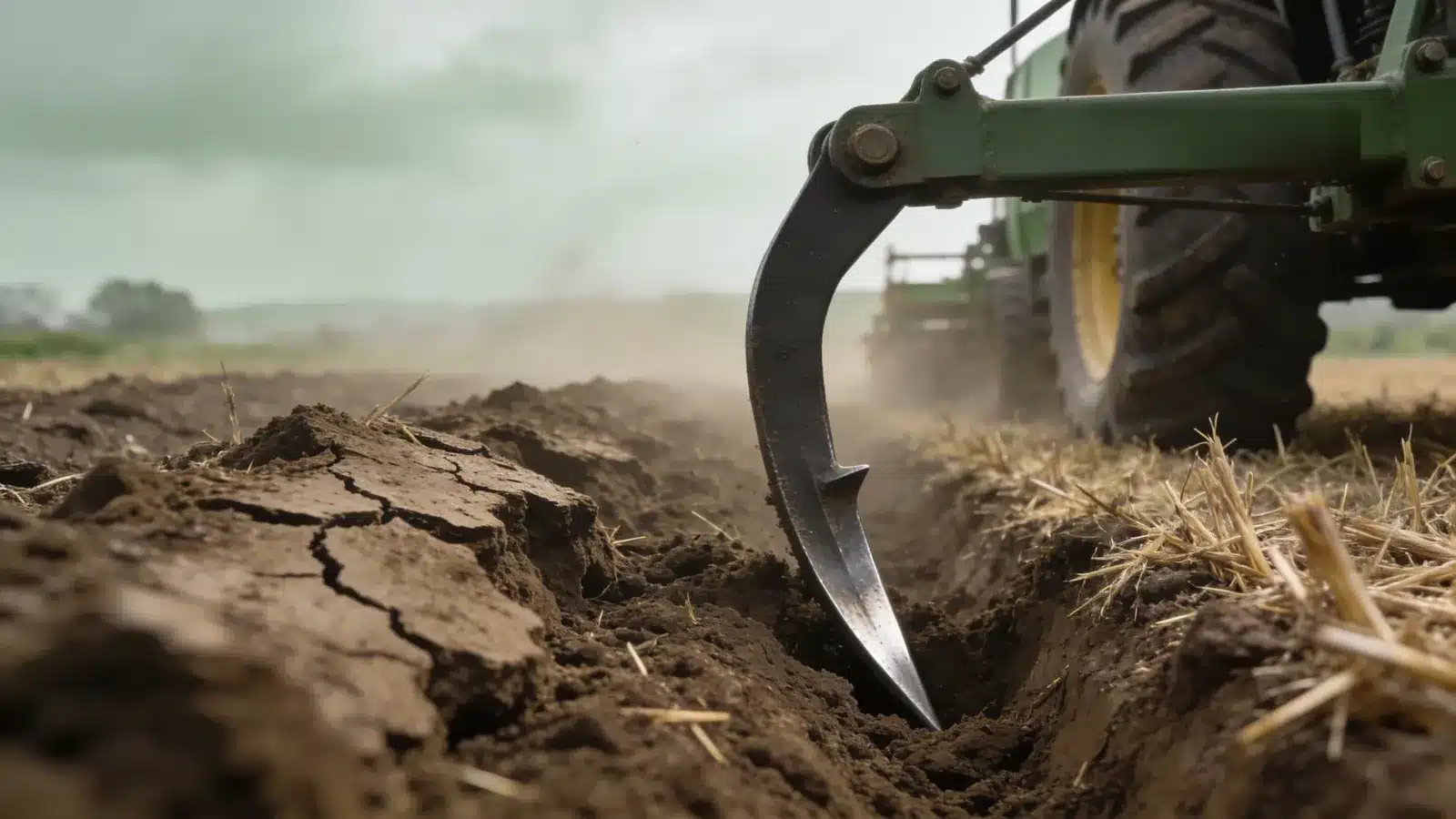
Every year the plough or discs pass at the same depth, and the wheels of heavy machinery press on the bottom of the furrow. Over time a dense layer forms beneath the ploughed soil — the plough pan. It lets neither water nor roots through.
- “Plough pan” — a dense layer at the boundary of years of tillage
- Roots turn sideways and can’t reach moisture deep down
- Water stagnates above the dense layer — the field takes a long time to dry out
- Slits from the shanks break up the layer, residues stay on top
- Roots go deep, water seeps into the subsoil
Check your field
Tick the signs you see in your field — and get an assessment of the compaction risk.
Tick everything you see in your field:
The more matches, the more likely there’s a dense layer beneath the topsoil.
Order deep loosening
- dig a 50 cm pit in several places in the field
- run a knife down the wall from top to bottom — you’ll feel the dense layer straight away
- see at what depth the roots turn sideways
- compare with the edge of the field where machinery didn’t travel
If there’s a dense layer at 25–35 cm in most of the pits, the whole field should be loosened, not just separate patches.
Deep loosener, chisel or plough
| Implement | Depth | Turns the layer | Residues | How often |
|---|---|---|---|---|
| Deep loosener | 35–45 cm | No | Stay on the surface | Once every 3–5 years |
| Chisel | up to 30–35 cm | No | Partly on the surface | Every year instead of ploughing |
| Plough | 20–30 cm | Yes | Are buried | Every year or every other year |
When and in what conditions to loosen
Best in summer or early autumn, after cereals or rapeseed.
A dry layer breaks and cracks. A wet one only gets “sliced”, with almost no effect.
The shank must pass under the compaction, not through it.
Don’t drive heavy machines onto a wet field — otherwise the compaction will come back.
Questions and answers
Why is a deep loosener needed?
To break up the compacted layer beneath the topsoil at a depth of 25–35 cm. After that, water seeps down and roots reach moisture and nutrients in the subsoil.
How deep should you loosen?
Usually 35–45 cm — 3–5 cm below the compacted layer. The depth is determined from a pit: the shank must pass under the dense layer.
How often is deep loosening needed?
Not every year — usually once every 3–5 years or when signs of compaction appear.
When is it better to loosen — in autumn or spring?
In summer or early autumn, after harvest, while the soil is dry. In spring the soil is usually wet, and loosening has little effect.
How is a deep loosener different from a chisel?
A deep loosener works deeper — 35–45 cm — and breaks up the compacted layer. A chisel goes shallower and more often replaces ploughing in annual tillage.
Bednar Terraland with a tractor and operator. Fuel and transport included, from 400 ha.
A comparison of all soil tillage implements is in the article “Soil tillage machinery: types of implements and how to choose”.